

Author
Anju Khanna Saggi
Content & Media Relations
Published: 2025-11-28
Last updated: 2026-09-27
Work instructions only work when they reflect actual work conditions. Your team will follow them when the instructions line up with how the machine or asset is built and when it takes the pressure of a live shift into consideration. Helpful instructions should have clear steps, and photos that can guide workers through a checklist.
In heavy industry, working with a solid work instruction template should be standard work - the baseline that keeps your machines running and auditors happy. This guide shows how to write instructions that crews trust and will use in the field.
Key takeaways
-
- SOPs set the rules; work instructions show how to complete a specific task on the machine itself.
- Crews ignore instructions when they don’t match the equipment, working conditions or language used on the floor.
- Strong instructions follow the operator’s actual route, using short steps, real photos, exact values and a clear picture of “done.”
- Version control prevents outdated instructions, safety notes or technical values from remaining in circulation.
- Digital access keeps current instructions within reach and creates traceable proof that every step was completed.
Contact a specialist
A procedure or SOP (Standard Operating Procedure) explains what needs to happen and why - the overall rules, responsibilities, and sequence for a task. It’s the high-level framework. For example, a lockout/tagout SOP tells the whole site how energy isolation must be done, who can apply locks, how verification works, and what documentation is required. Procedures/SOPs usually apply across departments, across shifts, and often across multiple sites.
A work instruction sits underneath that procedure/SOP umbrella and explains how to do the job on the actual machine in front of you. It provides the step-by-step instructions - e.g. torque values, bolt locations, photos, measurements, and the exact order the operator should move through.
Where the SOP sets the standard, the work instruction gives the hands-on walkthrough that makes that standard real. In most plants, the two work together: the SOP defines the rules, and the work instruction makes them practical and repeatable in the field.
Why Work Instructions matter
Even experienced operators usually complete the same job in slightly different ways. One person may choose to check the guard first, while another leaves it until the end. These small differences may seem harmless, but over time they can lead to missed steps, uneven equipment wear, safety risks, and repeated failures.
Work instructions create a shared baseline for how the task should be completed. They put the correct sequence, safety checks, tools, measurements, and acceptance limits in front of the worker at the moment they are needed. This helps experienced crews stay consistent while giving new operators something practical to follow without relying entirely on memory or verbal explanations.
They also prevent valuable knowledge from disappearing when an experienced employee changes roles or leaves the company. Instead of keeping the correct method in one person’s head, the operation has a documented and repeatable way of working.
Why most Work Instructions don’t get followed
When a work instruction doesn’t match the job, operators will spot it immediately. For example, photos may show a different model of screen or steps are listed in a nonsensical sequence. Once trust in the instruction process is broken, crews default to memory or shortcuts - because they believe the document will slow them down, rather than speed up their work.
Common reasons instructions fall apart in the field include:
- They’re written separately from the equipment. Steps don’t match the actual walk-around path or the way guards open.
- They assume ideal conditions. Real shifts can have mud, dust, wear, time pressure, and other constraints that can cause a spanner in the works, which the document ignores.
- They’re too long or too vague. Operators don’t have time for lengthy paragraphs. They need short, concise and numbered steps.
- They’re outdated. Equipment gets swapped, retrofitted, or relocated, but the instruction stays the same.
How to write Work Instructions
Writing work instructions starts with the job itself. Go to the machine, follow the path an operator takes, and build the steps in that same order, preferably together with an actual operator. Systems, such as CheckProof’s Checklist Builder App, that lets you build checklists directly in the app next to your assets, is a helpful tool for this. Keep each line short and action-focused so the flow is easy to follow. Use clear photos from the actual equipment, not generic images, and only include the details that matter - e.g. torque values, lockout points, grease types, measurements, and any “red-state” conditions that should stop the job.
Good work instructions make the safest, most reliable way to do the task obvious, even for operators with mixed experience levels. That means matching the real sequence of the job, calling out hazards at the right moment, and ending with a simple picture of what “done” looks like.
Work Instruction Template
Below is a work instruction template for a jaw crusher cheek plate replacement for a sample machine we will call “JC-204”. As you will see, work instructions do not need to be overly complex, even if the procedure itself may be complex - rather the opposite. The easier and clearer they are the better, but the most important part is to adapt them to the actual individuals who will be performing the actual repair.
Always involve the operators themselves in the process of creating a work instruction to ensure they are not overly complex and get the instructions across in a logical and easy to understand way.
Section
Details
Document name
Work Instruction - Jaw Crusher Cheek Plate Replacement (JC-204)
Task purpose
Replace worn cheek plates on jaw crusher JC-204 to restore proper crushing performance and prevent uneven wear.
Safety preparation
- Lockout/Tagout: Isolate power at MCC-3, Breaker CRSH-P1.
- Stored Energy: Bleed hydraulic tension cylinder.
- PPE: Hard hat, gloves, safety glasses, steel toes, hearing protection.
- Hazards: Pinch points around pitman, suspended loads, dust.
Tools & parts needed
- 40 mm & 46 mm sockets
- Torque wrench (1,000 Nm capacity)
- Come-along (2-ton)
- Anti-seize compound
- New cheek plates: CP-J204-L & CP-J204-R
Pre-checks
- Confirm correct unit: RFID tag on right frame beam.
- Scalper feed locked out.
- Walkway and handrails are secure.
- Inspect chamber for material buildup.
Step-by-step instructions
A. Remove Old Plates
- Apply penetrating oil to plate bolts.
- Support plate with come-along.
- Remove four mounting bolts.
- Guide plate out of chamber and lower safely.
Stop work if: Mounting surface shows cracks or deformation > 5 mm.
B. Install New Plates
- Match “L” and “R” markings.
- Apply anti-seize to bolts.
- Lift plate into position using come-along.
- Hand-tighten bolts.
- Torque to 850 Nm in cross pattern.
C. Tension Rod Check
- Inspect bushings; replace if wear > 2 mm.
- Torque tension nuts to 350 Nm.
- Verify jaw gap is 85 mm ± 3 mm.
Restart & verification
- Reinstall all guards.
- Clear tools/materials from the walkway.
- Remove LOTO and request a control-room jog.
- Run empty 30 seconds; listen for noise/vibration.
- Resume feed and monitor for the first 5 minutes.
What “done” looks like
- Both cheek plates are fully seated and torqued to spec.
- Jaw gap confirmed within tolerance.
- No unusual vibration, noise, or heat increase.
- All guards installed and the area clean.
- Insert images to support above.
Documentation
Log work under WO# 25749-JC204, attach before/after photos, and note torque values.
OBSERVE! The above work instruction template is just one example of how they could look, and you should write your own based on your assets, company policies and guidelines.
Are Work Instructions a Controlled Document?
Yes - in most plants, quarries, or similar, work instructions are treated as controlled documents because they guide tasks that affect safety, compliance, and equipment integrity. A controlled document is one where the version matters. If operators follow an old set of steps or torque values, the job can go wrong fast. That’s why controlled documents are managed with clear version history, approvals, and update rules.
For work instructions, control usually means three things:
- First, only approved versions are allowed in circulation - old copies are removed from binders, tablets, and shared drives.
- Second, updates follow a formal review path involving maintenance, safety, and sometimes operations, so the content reflects the real machine and current standards.
- Third, ownership is defined: someone is responsible for keeping the instruction accurate when equipment is rebuilt, relocated, or modified.
How to make your Work Instructions work in real conditions
Printed binders and static PDFs usually fail after the first revision. Updated steps, revised safety notes, or similar rarely, or never, make it back into the old copies. Digital work instructions that open on a phone or tablet, link directly to checklists, or launch with a quick scan at the machine turn instructions into something people actually use on every shift.
When operators can pull up the right instruction with one tap, follow the steps in order, add a photo, and sign off when they’re done, consistency takes care of itself. Supervisors get visibility without chasing paperwork, and audits stop being a scramble for proof. Simple access, clear steps, and traceable completion - that’s how a work instruction becomes real standard work.
The simple solution: a maintenance management platform, where everything can be stored in one and the same place, from checklists and schedules, to planning and deviations reporting.
FAQ - Work Instructions
Want to know what CheckProof can do for you?
CheckProof's easy-to-use app makes it easier to do the right thing at the right time. Discover how you can run world-class maintenance that is both cost-effective and sustainable.
Book a demo

2026-09-29
The AggNexus 2026 Report: Highlights from the Digital Innovation Conference
AggNexus 2026 in Austin was the biggest edition yet. After a year of AI first steps, the focus shifted to how to get people to change. Here are CheckProof’s key takeaways on change management, fast-moving AI, compliance and passing on know-how.

2026-09-24
A Stronger Foundation: Rohrdorfer on Digitizing Safety and Efficiency
Rohrdorfer, a leading construction materials producer in five countries, has used CheckProof for years to streamline safety, maintenance and quality work and to sharpen its customer focus.

2026-07-10
10 Must-Have Features for an Incident Management Platform in the Heavy Industry
When an incident happens, every minute matters. A near miss, equipment damage, or a hydraulic leak can quickly become a bigger risk if the issue is not reported, investigated, and followed up properly. When an incident happens, every minute matters. A near miss that goes unreported, or a fault that isn’t followed up, can quickly become a bigger risk if the issue is not reported.

2026-07-09
The Benefits of a Quarry Crusher Management Software
Paper forms, scattered systems, and knowledge locked in one person’s head all delay the same thing: catching crusher problems before they become breakdowns. This piece covers the four biggest challenges in crusher operations and how CheckProof brings inspections, maintenance, and issue tracking into one place.

2026-07-06
Hillhead 2026 – The CheckProof Report
Hillhead 2026 broke every record with 627 exhibitors and three days packed with electric machinery, connected intelligence, and sustainable innovation. CheckProof was on the ground as an exhibitor and sponsor — here’s what our team took away from the show floor.

2026-06-12
Brice Aggregates: What Operational Excellence Looks Like at a Needingworth Quarry
The inaugural CheckProof Industry Excellence Award winners on going digital from the ground up, and the moment their frontline teams bought in.
2026-05-07
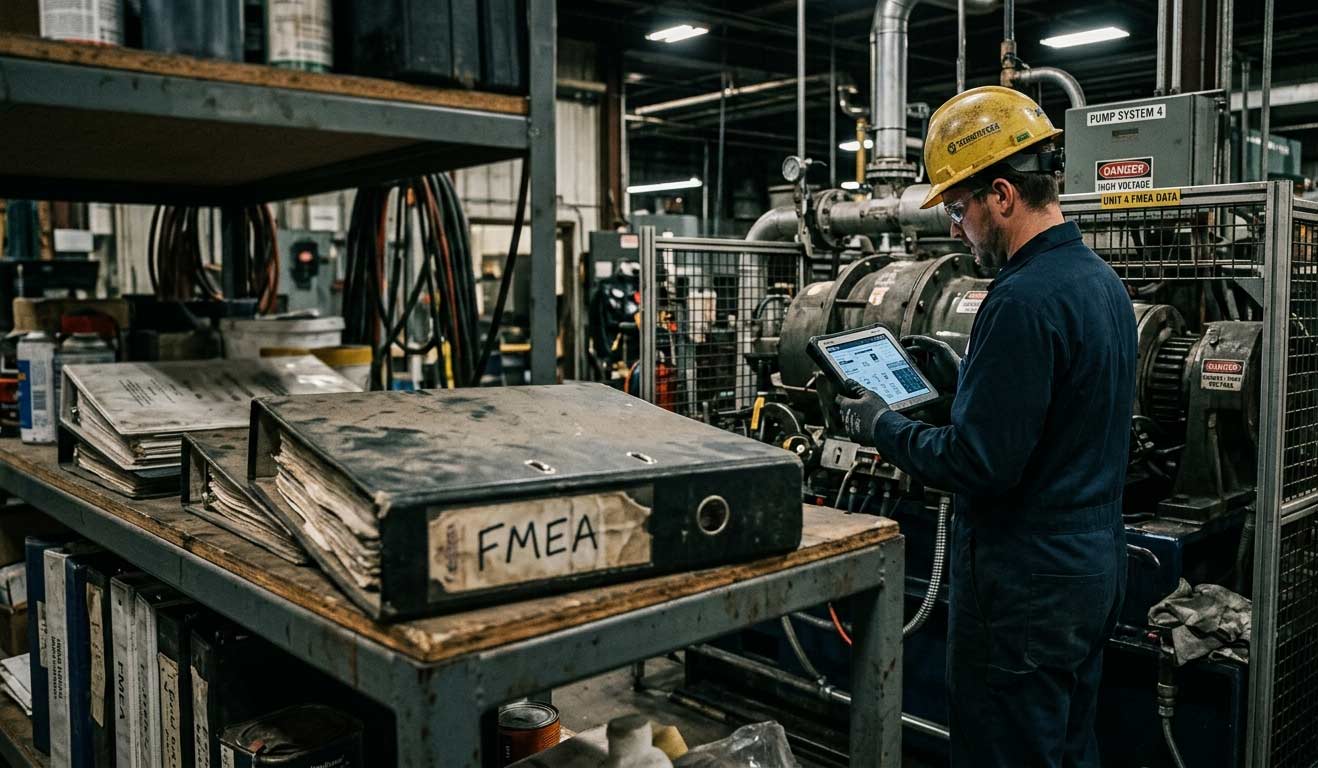
Why Your FMEA Is Sitting in a Binder (And What It Should Be Doing Instead)
Most facilities have an FMEA — but it’s collecting dust in a binder instead of driving decisions on the floor. Here’s how to turn your risk analysis into a living tool that actually protects uptime.

2026-04-24
CMMS Features and Functionality: What to Look for in a Maintenance Management System
Not all CMMS (Computerized Maintenance Management System) platforms are built the same, and in industries like quarrying, aggregates, cement, and ready-mix concrete, there are certain capabilities that carry more weight than others. The CMMS features that matter most for maintenance teams in asset-intensive industries include things such as centralized asset data, work order automation, preventive and predictive scheduling, digital checklists, deviation management, fleet optimization, and mobile-first design with offline capability.

2026-04-24
Cement Plant Inspection Checklist: What to Check, When to Check It, and Why It Fails
Most unplanned shutdowns in a cement plant don’t come out of nowhere. There’s usually a trail beforehand. Maybe a kiln bearing that’s been running 15 degrees above baseline for three weeks, noted by the operator on shift but never formally flagged because it hadn’t tripped an alarm yet. The issue isn’t a lack of warning, its that small deviations are often tolerated until they tip over into something serious.

2026-04-01
How to Choose the Right Work Order App for Your Industry
When something breaks on site, the fix gets most of the attention, but it’s rarely where things go wrong. What’s just as critical is everything around it: who reported it, who picked it up, what got missed between shifts, and how long it sat before anyone acted. In many operations, that whole flow is still held together by paper forms, radio calls, and memory.


