

Author
Linn Björklund
Published: 2023-05-02
Last updated: 2025-02-21
Electrification, technological development, and tackling climate change are all top priorities for the aggregates industry. What are the main obstacles toward a more sustainable industry, and what actions must be taken to reach the climate goals going forward? Although the numbers are looking bleak, there’s a great deal of optimism among industry players and experts within sustainable technology.
Climate change and tech development are high on the agenda for today’s aggregates businesses. This was evident during the 2023 edition of the yearly industry event organized by SBMI (the Swedish Aggregates Producers’ Association). And the challenges are considerable, not least when it comes to reaching the climate goals of the Paris Agreement.
As in all areas of society, the equation is difficult to solve: how can we maintain the standard we’ve become used to while taking the actions needed to tackle climate change? According to two of the speakers at SBMI’s event, Anneli Alersjö and Lydia Rydin from Ecogain, the current situation not only requires us to slow down the pace of climate change. We also need to rebuild and compensate for the impact we’ve already caused. Net zero is simply not enough – we have to reach net plus.
3 current challenges in the aggregates industry
1. Electrification is slowed down by limitations in grid capacity
The Swedish aggregates industry needs to be fully electrified by 2030. However, companies are already experiencing shutdowns or being refused to connect in the first place due to a lack of capacity in the electricity grid. A quick survey among participants at SBMI’s event confirmed the issue.
2. Material recycling: circular construction is still a long way away
Shifting to circular construction is another key factor in reaching climate goals. According to Valon Hasanaj from Sweco, another speaker at the SBMI event, the industry still has a long way to go. Only 7% of the materials produced for constructing new roads and railways in Europe are recycled or reused. In Sweden, that figure is a meager 1%.
3. Lack of frontline reporting
To reach industry goals of energy efficiency and reduced CO2 emissions, companies need to measure and follow up on suitable parameters using accurate data. Otherwise, initiatives may look good on paper but have no tangible impact. Effective reporting is critical to success, but the reporting tools are often less accessible to field workers than office staff. This gap needs to be closed. Because no matter how good your system is: without up-to-date and relevant data from connected equipment and on-site machine operators, you won’t get a full view of your actual operations.
Despite the challenges: almost 7 out of 10 believe industry climate goals are still within reach
During the SBMI event, a survey was conducted among attendees with the question: « Will the industry reach its climate goals according to plan? » The answers were distributed as follows:
Yes – 67%
No – 33%
In other words, the industry is predominantly optimistic, despite the apparent challenges ahead. A majority is convinced it’s still possible for the industry to meet the targets and that all commitments – large and small – matter. The important thing is to tackle the issues together and learn from the ones that have come further. One example could be implementing success factors from the mining industry in the construction industry.
Sustainability entrepreneur and climate activist predicts a (mainly) bright future
The Swedish sustainability entrepreneur and climate activist Rebecka Carlsson, who spoke at the SBMI event, stresses the importance of exponential climate action. It’s about halting climate change quickly enough: we need to stop increasing emissions exponentially and instead start reducing them exponentially. According to Carlsson, the next 100 years will see a technological development equivalent to 20,000 years. Estimates indicate that the world’s 500 largest companies will not exist ten years from now and that the ones replacing them have yet to be founded.
This presents us with the challenge of coming up with solutions for a future we cannot predict. At the same time, the massive development rate holds great opportunities. Once we find the right way – with the help of exponential technologies, as well as behavioral and system changes – this will quickly set off development in the right direction, according to Rebecka Carlsson.
—
Want to learn more about how digitalization can contribute to reducing CO2 emissions in heavy industries? Don’t miss this article on how to monitor fuel consumption and idle time with real-time data.
Author

Want to know what CheckProof can do for you?
CheckProof's easy-to-use app makes it easier to do the right thing at the right time. Discover how you can run world-class maintenance that is both cost-effective and sustainable.
Book a demo
2026-09-29
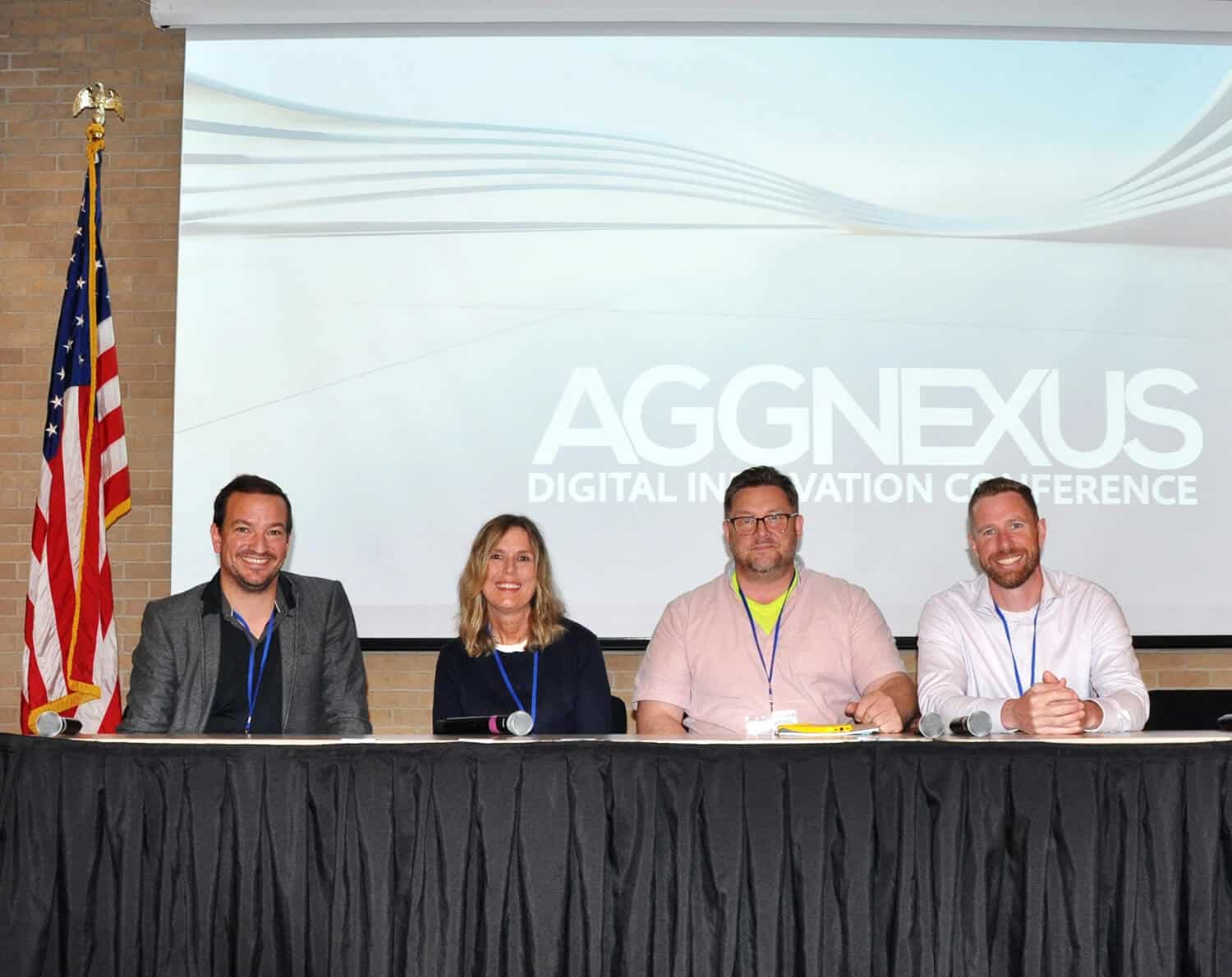
The AggNexus 2026 Report: Highlights from the Digital Innovation Conference
AggNexus 2026 in Austin was the biggest edition yet. After a year of AI first steps, the focus shifted to how to get people to change. Here are CheckProof’s key takeaways on change management, fast-moving AI, compliance and passing on know-how.
2026-09-24
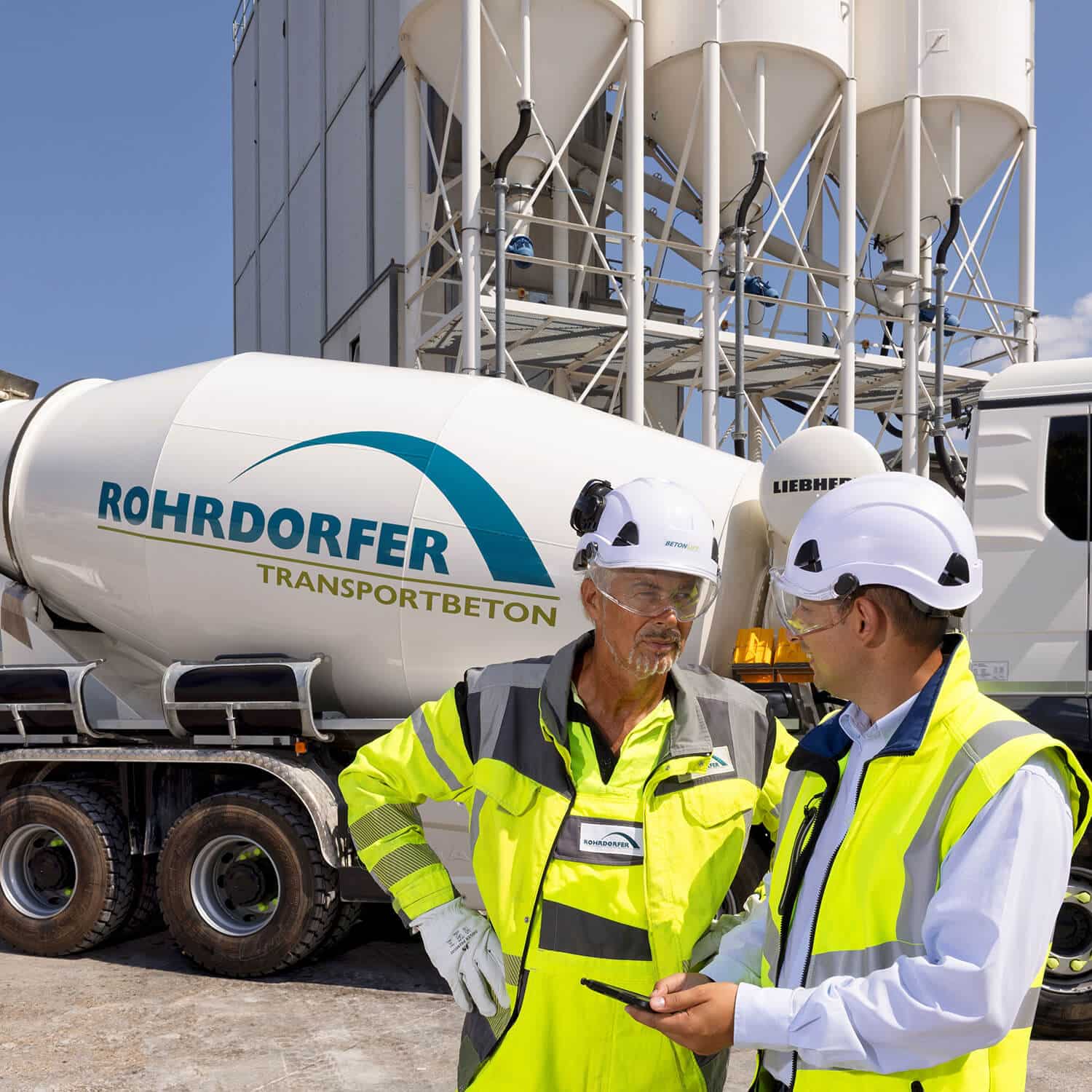
A Stronger Foundation: Rohrdorfer on Digitizing Safety and Efficiency
Rohrdorfer, a leading construction materials producer in five countries, has used CheckProof for years to streamline safety, maintenance and quality work and to sharpen its customer focus.

2026-07-10
10 Must-Have Features for an Incident Management Platform in the Heavy Industry
When an incident happens, every minute matters. A near miss, equipment damage, or a hydraulic leak can quickly become a bigger risk if the issue is not reported, investigated, and followed up properly. When an incident happens, every minute matters. A near miss that goes unreported, or a fault that isn’t followed up, can quickly become a bigger risk if the issue is not reported.

2026-07-09
The Benefits of a Quarry Crusher Management Software
Paper forms, scattered systems, and knowledge locked in one person’s head all delay the same thing: catching crusher problems before they become breakdowns. This piece covers the four biggest challenges in crusher operations and how CheckProof brings inspections, maintenance, and issue tracking into one place.

2026-07-06
Hillhead 2026 – The CheckProof Report
Hillhead 2026 broke every record with 627 exhibitors and three days packed with electric machinery, connected intelligence, and sustainable innovation. CheckProof was on the ground as an exhibitor and sponsor — here’s what our team took away from the show floor.

2026-06-12
Brice Aggregates: What Operational Excellence Looks Like at a Needingworth Quarry
The inaugural CheckProof Industry Excellence Award winners on going digital from the ground up, and the moment their frontline teams bought in.
2026-05-07
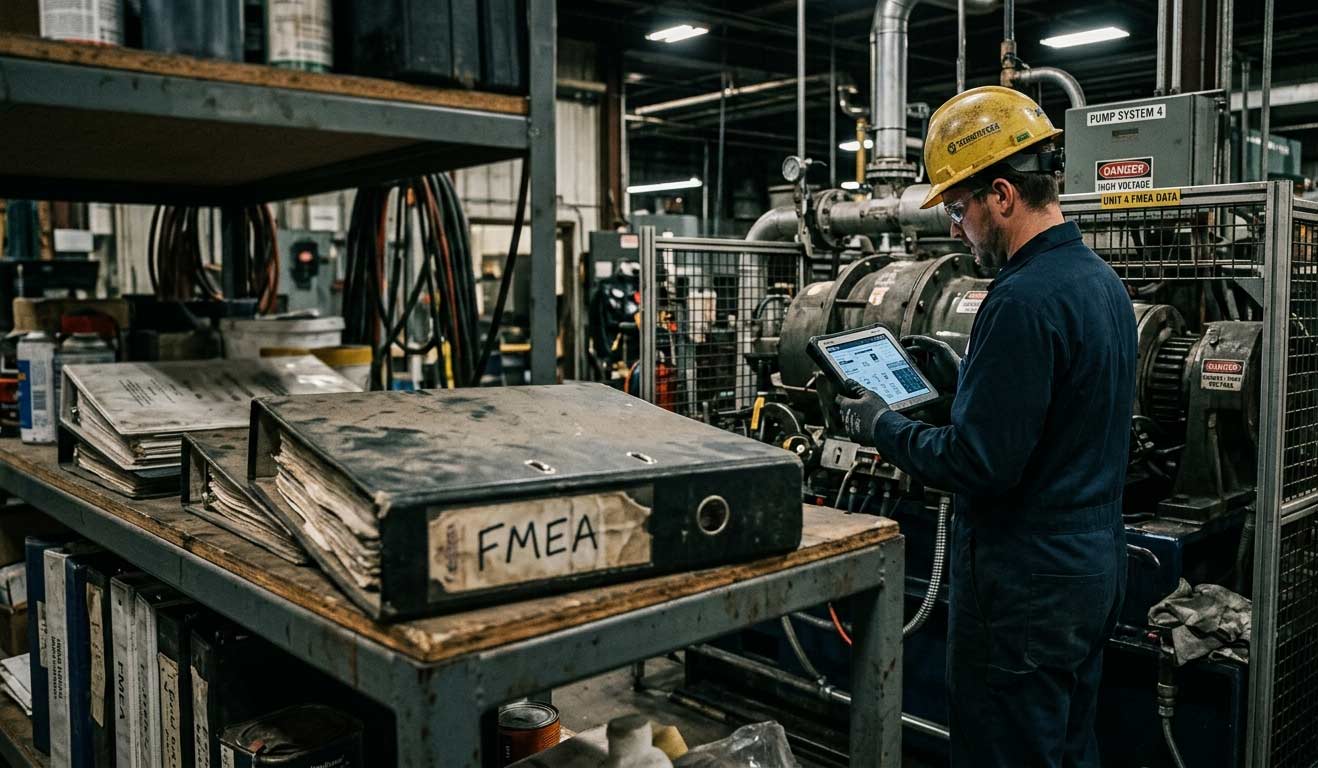
Why Your FMEA Is Sitting in a Binder (And What It Should Be Doing Instead)
Most facilities have an FMEA — but it’s collecting dust in a binder instead of driving decisions on the floor. Here’s how to turn your risk analysis into a living tool that actually protects uptime.

2026-04-24
CMMS Features and Functionality: What to Look for in a Maintenance Management System
Not all CMMS (Computerized Maintenance Management System) platforms are built the same, and in industries like quarrying, aggregates, cement, and ready-mix concrete, there are certain capabilities that carry more weight than others. The CMMS features that matter most for maintenance teams in asset-intensive industries include things such as centralized asset data, work order automation, preventive and predictive scheduling, digital checklists, deviation management, fleet optimization, and mobile-first design with offline capability.

2026-04-24
Cement Plant Inspection Checklist: What to Check, When to Check It, and Why It Fails
Most unplanned shutdowns in a cement plant don’t come out of nowhere. There’s usually a trail beforehand. Maybe a kiln bearing that’s been running 15 degrees above baseline for three weeks, noted by the operator on shift but never formally flagged because it hadn’t tripped an alarm yet. The issue isn’t a lack of warning, its that small deviations are often tolerated until they tip over into something serious.

2026-04-01
How to Choose the Right Work Order App for Your Industry
When something breaks on site, the fix gets most of the attention, but it’s rarely where things go wrong. What’s just as critical is everything around it: who reported it, who picked it up, what got missed between shifts, and how long it sat before anyone acted. In many operations, that whole flow is still held together by paper forms, radio calls, and memory.


