
Author
Anju Khanna Saggi
Content & Media Relations
Published: 2025-11-21
Last updated: 2026-09-28
An essential inspection checklist should be anchored in safety, maintenance, and compliance, the three factors that decide whether production runs smoothly or stalls before breakfast. Every shift could start with the same three questions: Is the area safe? Is the equipment ready? Are we covered if an inspector walks in?
When these three line up, operators move without unplanned interruptions, supervisors get clean visibility, and the site stays ahead of breakdowns and regulators. When they don’t, you will suffer from missed hazards, surprise downtime, and paperwork gaps that need to be managed during audits.
This article breaks down how each pillar fits into a real working inspection checklist, the kind that operators can complete in minutes and trust, and what we believe is the most important tool to have to keep everything on track.
Key takeaways
-
- Safety checks find hazards, maintenance checks reveal wear, and compliance checks verify that requirements are met.
- Consistent inspection routines help crews notice changes before hazards or equipment faults worsen.
- Keep checklists focused and define acceptable conditions so operators know what needs attention.
- Every inspection finding needs a responsible person, a deadline, and confirmation that the problem is fixed.
- Inspection software helps teams share findings, track recurring problems, and keep evidence for audits.
The Basics: What is an Inspection Checklist?
An inspection checklist is a structured list of items that need to be examined across a site, work area, or piece of equipment. It gives the person carrying out the inspection a clear route to follow, helping them complete the same checks consistently in the same order without relying on memory.
A good checklist does more than confirm that an inspection took place. It records the condition at that moment, highlights anything that has changed, and shows what happened after a problem was found. Depending on its purpose, it may focus on workplace safety, equipment maintenance, regulatory compliance, or a combination of all three.
What should be included in an Inspection Checklist?
The “checks” that should be included in an inspection checklist need to reflect the task and its risks, but the basic structure remains similar. It should make each check easy to understand and give the operator a clear way to record anything that needs attention.
Include:
- The site, work area, or equipment being inspected
- The date, time, and person completing the inspection
- Clear inspection points arranged in a logical order
- The expected condition or acceptance criteria
- Space for short notes, readings, and photos
- A way to flag defects and set their priority
- Responsibility and deadlines for corrective actions
- Confirmation of when each issue has been resolved
Keep the checklist focused. If it contains too many irrelevant or repetitive questions, operators are more likely to rush, guess, or tick boxes without properly checking the condition in front of them. Below we’ll go into the specifics of some different checklists, what do’s and don’ts you need to keep in mind.
Safety Inspection
A safety inspection or risk assessment sets the tone for the entire shift. It gives crews a clean read of the ground, the work area, and the conditions they’re stepping into before a single machine fires up. Operators move through the area, ensuring the plant and site conditions are safe for the day’s workload.
A good safety inspection checklist doesn’t drown people in boxes to tick. It focuses on the hazards that tend to creep in overnight. These checks should ideally only take a few minutes but be set on a clear routine schedule. A strong safety inspection checklist keeps everyone honest about the state of the site, about what’s safe and what needs attention.
Do’s and Don’ts of Safety Inspections
Do’s
- Do approach the inspection with a clear, systematic method so nothing is overlooked.
- Do pay attention to changes in the environment (shifting material, new work areas, altered routes).
- Do verify safeguards and controls the same way every time to build reliable patterns.
- Do document conditions in a way that helps the next shift understand what you saw.
- Do treat the inspection as a moment to reset your awareness before production picks up.
Don’ts
- Don’t rush through familiar areas; complacency hides the most common hazards.
- Don’t rely on assumptions about conditions you haven’t checked firsthand.
- Don’t overlook small deviations simply because they seem minor; patterns start with small changes.
- Don’t allow the inspection to become a box-checking exercise; it should reflect the real state of the ground you’re about to work on.
Equipment Maintenance Inspection
A maintenance inspection checklist gives crews a grounded read on the health of the machines that carry the shift. It’s not a deep teardown, rather a steady routine that catches the early signs of wear before they turn into failures. Operators move through the machine with a practiced flow to look at things such as leaks, listen for unusual vibration, feel for loose fittings, check belts and hoses, scan the electrical panels, confirm fluid levels, and note anything that looks out of pattern.
These equipment inspections stay valuable when they’re consistent, where you go the same route, cover the same touchpoints, and do the same checks every day. The goal is to spot the changes; a small oil stain where there wasn’t one yesterday, a belt that’s tracking differently, a bearing that’s running hotter, or a screen panel starting to crack. These details shape repair decisions long before downtime shows up on the board.
Do’s and Don’ts of Equipment Maintenance Inspection
Do’s:
- Do follow the same equipment inspection path around the machine so nothing gets skipped over time.
- Do look for changes from the previous shift to identify potential issues.
- Do confirm the basics: fluids, filters, belts, fittings, and visible wear points.
- Do use clear, simple notes and ideally photos that help everyone within the maintenance team understand what you’re seeing.
- Do treat minor observations as signals; most major failures start small.
Don’ts:
- Don’t rely on memory for past conditions, compare against what you can see today.
- Don’t ignore heat, smell, or sound changes; they often reveal issues before they’re visible.
- Don’t downplay irregularities to keep the machine running. Rather an extra check, than a broken-down machine.
Compliance Inspection
A compliance inspection checklist keeps the site aligned with the rules that shape every operation: workplace exams, environmental controls, fire protection, signage, recordkeeping, and all the other details regulators look for when they walk the grounds.
It is ideally formatted as a steady routine that confirms the essentials, essentially doing your own compliance inspections. These checks tie the day’s work back to the standards that keep the site legal, traceable, and defensible. Good compliance inspections stay consistent across crews and shifts, so the story in the records matches the reality on the ground. They make it easier to show what was checked, when it was checked, and what was corrected along the way; the kind of clarity that matters when an inspector or auditor asks for proof.
Do’s and Don’ts of Compliance Inspection
Do’s:
- Do follow the established route so every regulated area gets the same attention.
- Do confirm that required documents, postings, and permits are current and visible.
- Do check fire safety, environmental controls, and housekeeping with the same discipline each day.
- Do record collection and bookkeeping of records in a way that creates a clean, traceable history.
- Do treat deviations as signals to act, not paperwork to store.
Don’ts:
- Don’t assume documentation is complete without looking, gaps often hide in the routine stuff.
- Don’t rely on verbal updates for regulated items; if it’s not recorded, it’s vulnerable.
- Don’t wait for an audit to tighten your process, readiness is a daily habit, not a scramble.
Your Most Important Tool: Inspection Software
While safety, maintenance, and compliance inspections are the most important ones, there are numerous others to keep in mind as well. While many of them will have some overlap, there are still a significant amount of inspection checklists to keep track of.
Pen and paper inspections are prone to inconsistencies: illegible handwriting, missed fields, forms that never make it back to the office. Even when results are later typed into a spreadsheet, that extra step introduces its own gaps, entries get mistyped, delayed, or dropped altogether, and a spreadsheet still isn't a system that tracks what's overdue or flags a repeat issue. If you are to take anything from this article, it is to consider investing in some sort of digital tool like an inspection software. A digital platform holds each inspection in one place, gives crews a clear path to follow, and turns every check into something the whole operation can see and act on.
It allows operators to move through a checklist the same way every time, guided step by step. Forced photos capture wear before it grows. Simple note fields make issues clear without long explanations. With an inspection software, inspections stop being isolated moments and become part of a connected routine. And the site builds a trustworthy history that stands up to audits, investigations, and turnover.
FAQ - Inspection Checklists
Want to know what CheckProof can do for you?
CheckProof's easy-to-use app makes it easier to do the right thing at the right time. Discover how you can run world-class maintenance that is both cost-effective and sustainable.
Book a demo

2026-09-29
The AggNexus 2026 Report: Highlights from the Digital Innovation Conference
AggNexus 2026 in Austin was the biggest edition yet. After a year of AI first steps, the focus shifted to how to get people to change. Here are CheckProof’s key takeaways on change management, fast-moving AI, compliance and passing on know-how.

2026-09-24
A Stronger Foundation: Rohrdorfer on Digitizing Safety and Efficiency
Rohrdorfer, a leading construction materials producer in five countries, has used CheckProof for years to streamline safety, maintenance and quality work and to sharpen its customer focus.

2026-07-10
10 Must-Have Features for an Incident Management Platform in the Heavy Industry
When an incident happens, every minute matters. A near miss, equipment damage, or a hydraulic leak can quickly become a bigger risk if the issue is not reported, investigated, and followed up properly. When an incident happens, every minute matters. A near miss that goes unreported, or a fault that isn’t followed up, can quickly become a bigger risk if the issue is not reported.

2026-07-09
The Benefits of a Quarry Crusher Management Software
Paper forms, scattered systems, and knowledge locked in one person’s head all delay the same thing: catching crusher problems before they become breakdowns. This piece covers the four biggest challenges in crusher operations and how CheckProof brings inspections, maintenance, and issue tracking into one place.

2026-07-06
Hillhead 2026 – The CheckProof Report
Hillhead 2026 broke every record with 627 exhibitors and three days packed with electric machinery, connected intelligence, and sustainable innovation. CheckProof was on the ground as an exhibitor and sponsor — here’s what our team took away from the show floor.

2026-06-12
Brice Aggregates: What Operational Excellence Looks Like at a Needingworth Quarry
The inaugural CheckProof Industry Excellence Award winners on going digital from the ground up, and the moment their frontline teams bought in.
2026-05-07
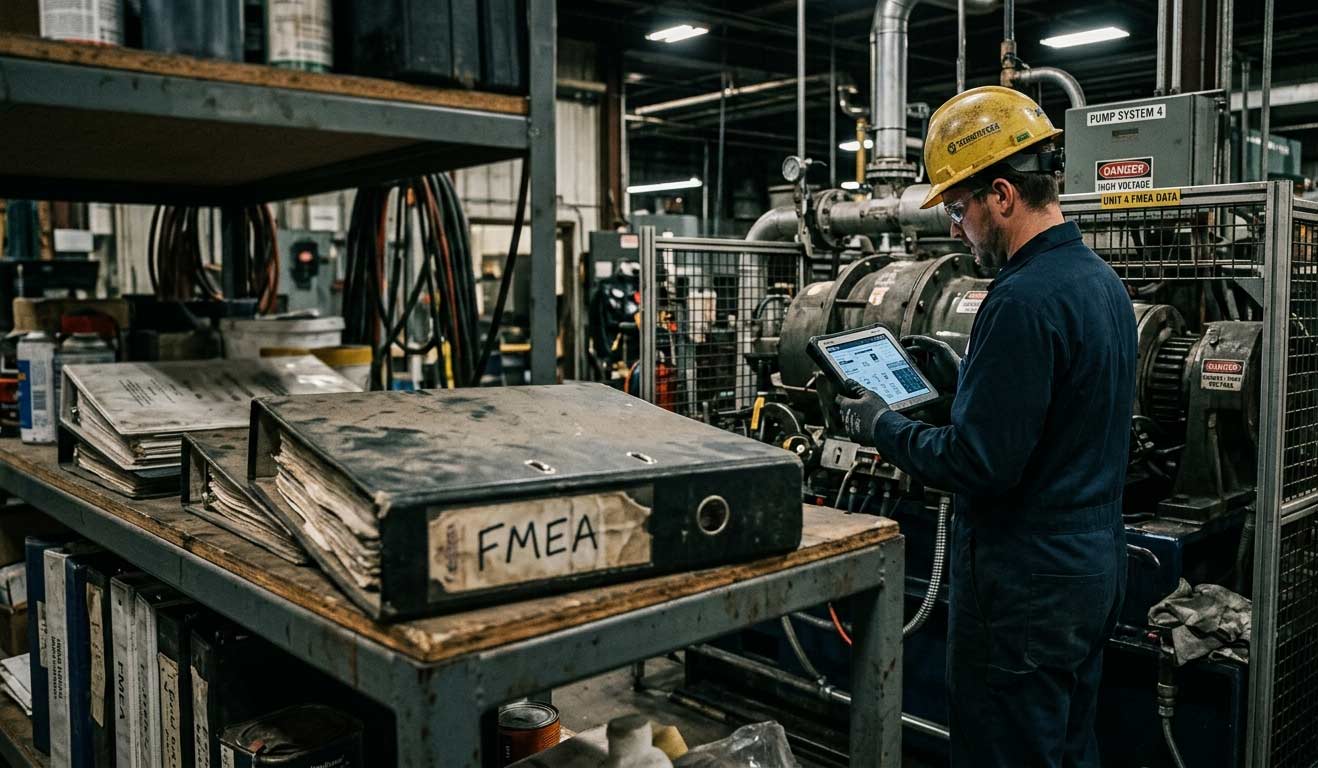
Why Your FMEA Is Sitting in a Binder (And What It Should Be Doing Instead)
Most facilities have an FMEA — but it’s collecting dust in a binder instead of driving decisions on the floor. Here’s how to turn your risk analysis into a living tool that actually protects uptime.

2026-04-24
CMMS Features and Functionality: What to Look for in a Maintenance Management System
Not all CMMS (Computerized Maintenance Management System) platforms are built the same, and in industries like quarrying, aggregates, cement, and ready-mix concrete, there are certain capabilities that carry more weight than others. The CMMS features that matter most for maintenance teams in asset-intensive industries include things such as centralized asset data, work order automation, preventive and predictive scheduling, digital checklists, deviation management, fleet optimization, and mobile-first design with offline capability.

2026-04-24
Cement Plant Inspection Checklist: What to Check, When to Check It, and Why It Fails
Most unplanned shutdowns in a cement plant don’t come out of nowhere. There’s usually a trail beforehand. Maybe a kiln bearing that’s been running 15 degrees above baseline for three weeks, noted by the operator on shift but never formally flagged because it hadn’t tripped an alarm yet. The issue isn’t a lack of warning, its that small deviations are often tolerated until they tip over into something serious.

2026-04-01
How to Choose the Right Work Order App for Your Industry
When something breaks on site, the fix gets most of the attention, but it’s rarely where things go wrong. What’s just as critical is everything around it: who reported it, who picked it up, what got missed between shifts, and how long it sat before anyone acted. In many operations, that whole flow is still held together by paper forms, radio calls, and memory.