
Author
Linn Björklund
Published: 2023-07-11
Last updated: 2025-02-21
If your business relies on skilled and experienced frontline workers, you’re probably struggling with the same challenges as many of your industry peers: How can you replace the generation of workers now reaching retirement age? And how do you ensure you don’t lose the valuable knowledge they’ve gathered through the years?
Filling the shoes of workers who know their ready mix plants, aggregates quarries, and asphalt plants like the back of their hand is no easy task. The current skills shortage, with 77% of employers reporting difficulty filling roles, certainly doesn’t help.
Across the heavy industry landscape, employers are struggling to attract and retain new generations of employees. According to a recent McKinsey survey, sectors such as mining, oil & gas, construction, and manufacturing are considered significantly less appealing to talent under 30 than for example financial services, tech, or healthcare. As many as 71 percent of mining leaders say this talent shortage is preventing them from reaching their production targets and strategic objectives.
Lack of skilled workers affects workplace productivity and safety
To Joe Cage, Customer Success Manager at CheckProof, the survey results are not surprising. Joe has worked at several sites and quarries in the UK aggregates industry, and realizes that frontline jobs might not appeal to the tech-savvy youth of today – at least not at first glance:

– Long shifts of heavy manual labor outdoors in all kinds of weather might not seem like a promising prospect. But for someone who’s interested in problem-solving and prefers practical work to sitting behind a desk, these jobs offer a wealth of opportunity. You’re offered plenty of training and a clear career ladder if you stay on.
What do companies do if they fail to fill their vacancies – and what are the consequences?
– They’re forced to resort to the bare minimum in terms of equipment maintenance, which affects both productivity and safety standards. To avoid these issues, companies tend to hire contractors as a temporary solution. But although a contractor might know how to operate a particular machine, they don’t know the ins and outs of your specific site. And since you’re not guaranteed to get the same person each time, you might end up having to explain your routines and safety hazards from the beginning to a new person every week, Joe explains.
4 ways digitalization helps mitigate the impact of skills shortage
In his current role with CheckProof, Joe helps heavy industry businesses leverage digital technology to improve operational efficiency, routine compliance, and resource optimization. As a bonus effect of making the transition from pen and paper to digital routines, these companies also become better prepared to tackle the challenges linked to the skills shortage and the generational shift. How? Below, Joe shares some examples.
1. Digital SOP (Standard Operating Procedure) in the palm of your hand
A digital platform lets you create detailed and interactive checklists, including photos, videos, and step-by-step instructions, for all sorts of tasks and routines around your sites. And with today’s mobile devices, frontline staff can carry these digital SOPs around in their pockets.
Digital platforms also enable you to build up a record of documented tasks over time. For example, when the first frost hits and everything freezes up, you can go back and see what you did last year in the same situation. Knowing how your routines need to adapt to the weather, you can create a separate winter checklist for the cold season.
2. Transfer of knowledge that reduces key person dependency
How much of the vital knowledge on how to operate your sites is kept exclusively in the heads of your most experienced staff members? I’ve personally received text messages from former colleagues years after I’ve left a job, with questions on how to do some specific task. By digitizing all necessary routines, you make sure important information is available even if a key person is absent or leaves your company.
Start by creating checklists for the most important tasks around your sites, like safety routines or checks at the start and end of each day. Then you just keep building up your internal knowledge bank over time. As soon as you find crucial information, add it to your system. Even with a clear manufacturer manual, there are always tricks that are unique to your site, so make sure your checklists are detailed and customized.
3. Quick onboarding of new hires and contractors
With access to detailed instructions for all tasks on their mobile devices, newly hired employees – as well as temporary contractors – are able to do things correctly from day one. This reduces onboarding time, as well as the risk of hazardous mistakes.
4. Stronger employer brand
Young people are so used to technology and apps. They’ve grown up with it. Pen and paper routines would be completely alien to them. Digitalization isn’t just about being efficient. It’s also a key part of being a modern and attractive employer in today’s job market.
Your guide to successful digital transformation
Although the benefits of digitalization are clear to most businesses, the implementation process can be challenging. Get best practices and avoid common mistakes in our guide on how to digitally transform your heavy-industry business in 6 simple steps.
Author

Want to know what CheckProof can do for you?
CheckProof's easy-to-use app makes it easier to do the right thing at the right time. Discover how you can run world-class maintenance that is both cost-effective and sustainable.
Book a demo
2026-09-29
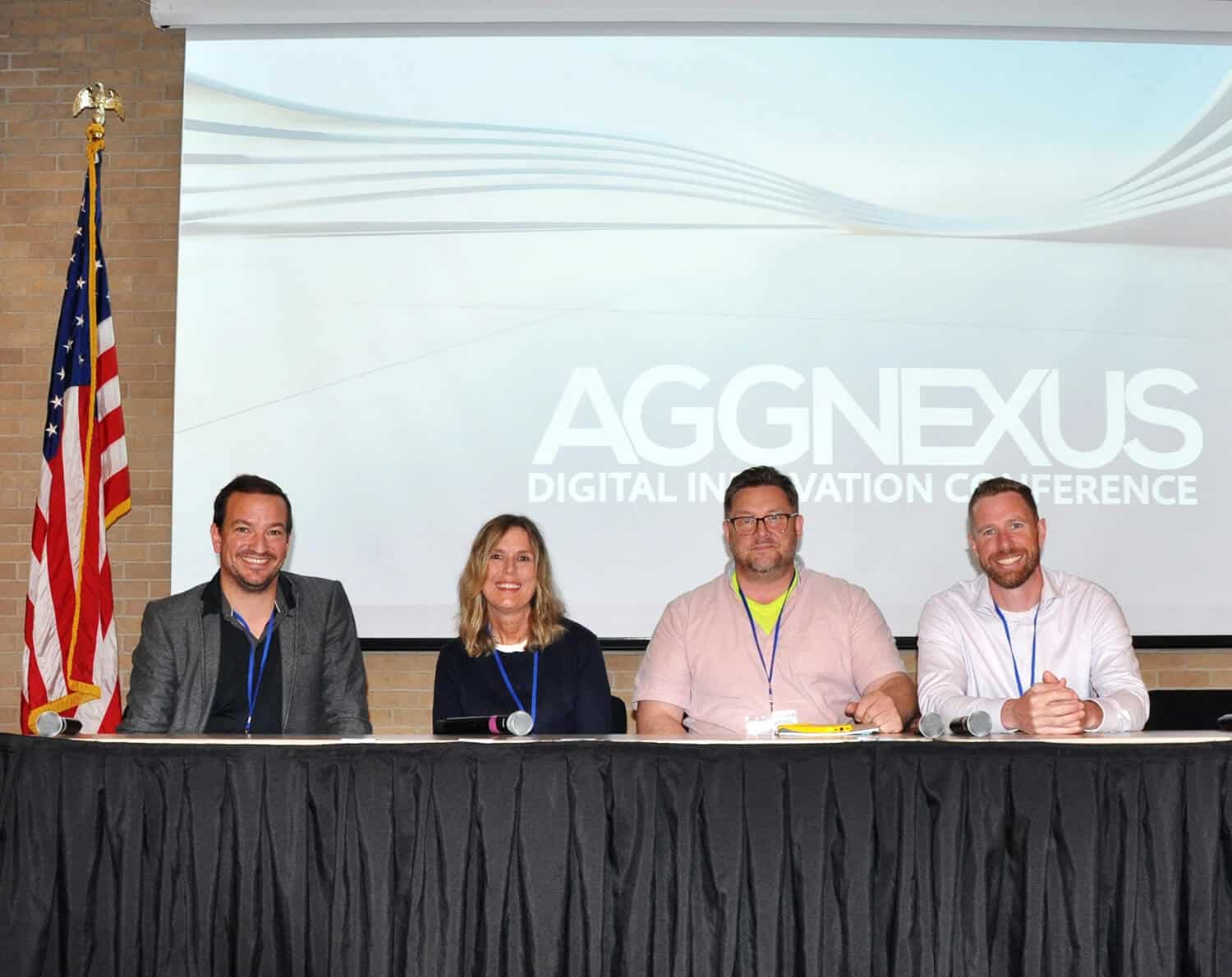
The AggNexus 2026 Report: Highlights from the Digital Innovation Conference
AggNexus 2026 in Austin was the biggest edition yet. After a year of AI first steps, the focus shifted to how to get people to change. Here are CheckProof’s key takeaways on change management, fast-moving AI, compliance and passing on know-how.
2026-09-24
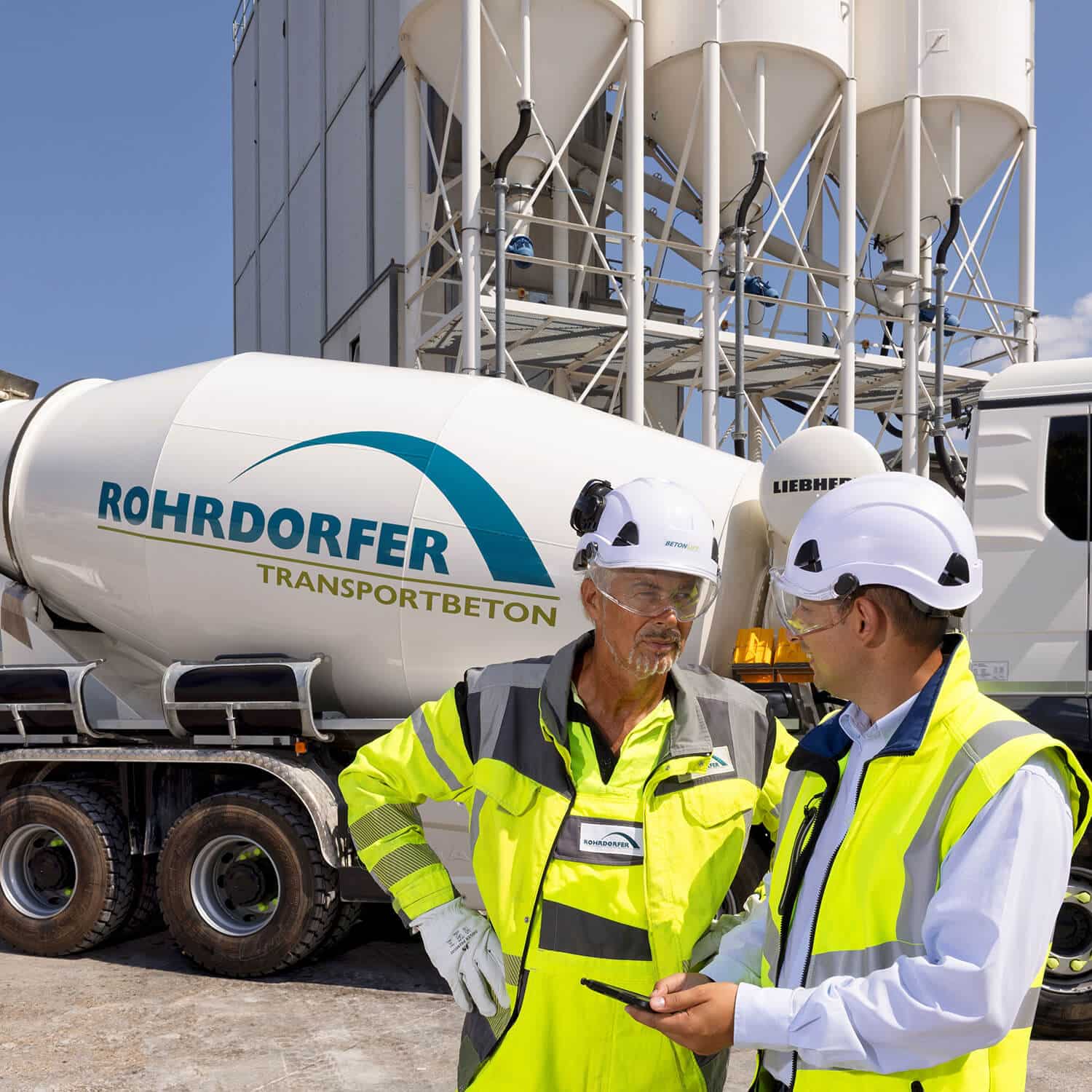
A Stronger Foundation: Rohrdorfer on Digitizing Safety and Efficiency
Rohrdorfer, a leading construction materials producer in five countries, has used CheckProof for years to streamline safety, maintenance and quality work and to sharpen its customer focus.

2026-07-10
10 Must-Have Features for an Incident Management Platform in the Heavy Industry
When an incident happens, every minute matters. A near miss, equipment damage, or a hydraulic leak can quickly become a bigger risk if the issue is not reported, investigated, and followed up properly. When an incident happens, every minute matters. A near miss that goes unreported, or a fault that isn’t followed up, can quickly become a bigger risk if the issue is not reported.

2026-07-09
The Benefits of a Quarry Crusher Management Software
Paper forms, scattered systems, and knowledge locked in one person’s head all delay the same thing: catching crusher problems before they become breakdowns. This piece covers the four biggest challenges in crusher operations and how CheckProof brings inspections, maintenance, and issue tracking into one place.

2026-07-06
Hillhead 2026 – The CheckProof Report
Hillhead 2026 broke every record with 627 exhibitors and three days packed with electric machinery, connected intelligence, and sustainable innovation. CheckProof was on the ground as an exhibitor and sponsor — here’s what our team took away from the show floor.

2026-06-12
Brice Aggregates: What Operational Excellence Looks Like at a Needingworth Quarry
The inaugural CheckProof Industry Excellence Award winners on going digital from the ground up, and the moment their frontline teams bought in.
2026-05-07
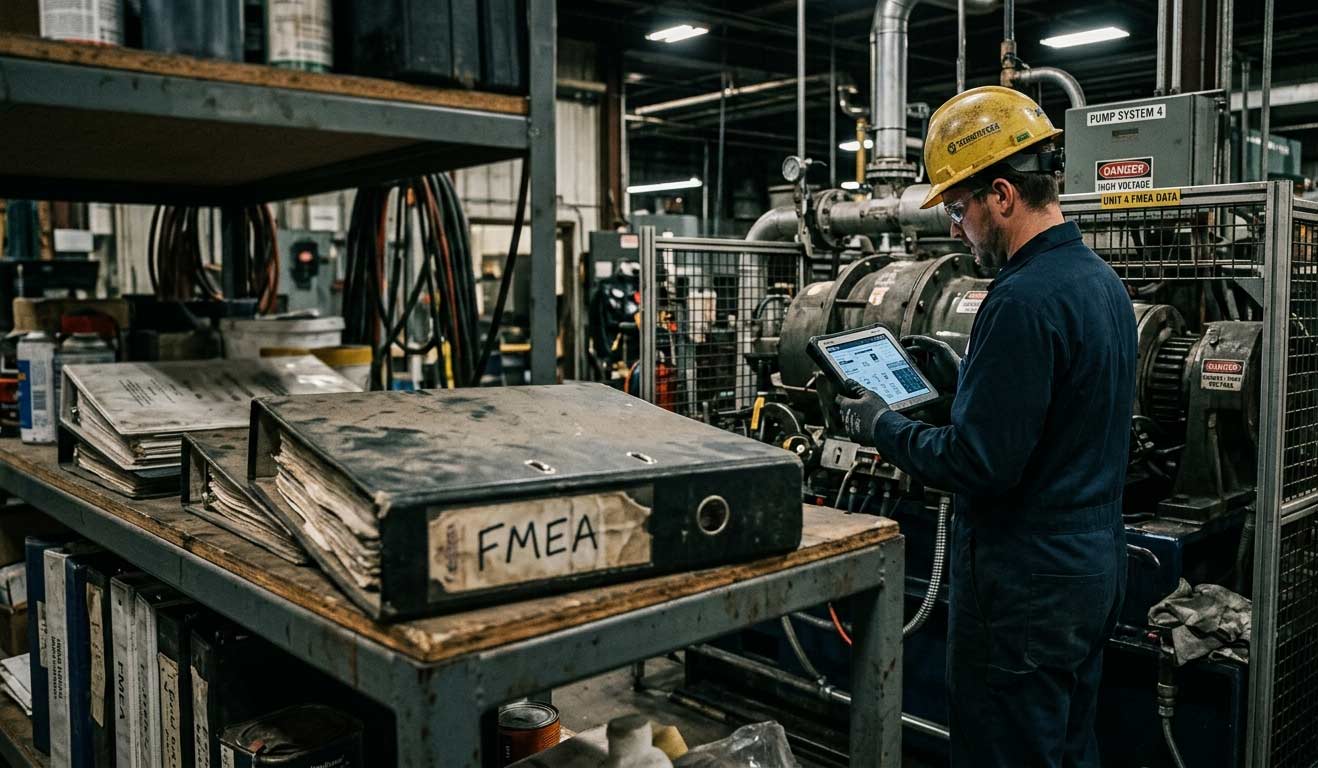
Why Your FMEA Is Sitting in a Binder (And What It Should Be Doing Instead)
Most facilities have an FMEA — but it’s collecting dust in a binder instead of driving decisions on the floor. Here’s how to turn your risk analysis into a living tool that actually protects uptime.

2026-04-24
CMMS Features and Functionality: What to Look for in a Maintenance Management System
Not all CMMS (Computerized Maintenance Management System) platforms are built the same, and in industries like quarrying, aggregates, cement, and ready-mix concrete, there are certain capabilities that carry more weight than others. The CMMS features that matter most for maintenance teams in asset-intensive industries include things such as centralized asset data, work order automation, preventive and predictive scheduling, digital checklists, deviation management, fleet optimization, and mobile-first design with offline capability.

2026-04-24
Cement Plant Inspection Checklist: What to Check, When to Check It, and Why It Fails
Most unplanned shutdowns in a cement plant don’t come out of nowhere. There’s usually a trail beforehand. Maybe a kiln bearing that’s been running 15 degrees above baseline for three weeks, noted by the operator on shift but never formally flagged because it hadn’t tripped an alarm yet. The issue isn’t a lack of warning, its that small deviations are often tolerated until they tip over into something serious.

2026-04-01
How to Choose the Right Work Order App for Your Industry
When something breaks on site, the fix gets most of the attention, but it’s rarely where things go wrong. What’s just as critical is everything around it: who reported it, who picked it up, what got missed between shifts, and how long it sat before anyone acted. In many operations, that whole flow is still held together by paper forms, radio calls, and memory.