
Author
Anju Khanna Saggi
Content & Media Relations
Published: 2024-08-02
Last updated: 2025-02-21
Best Practices and Choosing the Right System for Optimal Efficiency
It is a well-known fact that the aggregates industry operates on slim margins. Whilst a pursuit for higher production quantities is desirable in this segment to offset this, companies are well-served to take a closer look at streamlining their inventory management systems. This will help optimize cost reductions, ensure optimal production forecasting and give procurement advantages.
This article covers:
Inventory Management in the Aggregates Industry
Effective inventory management is a crucial aspect of operations in the aggregates industry. From ensuring the right materials are available when needed to minimizing costs and reducing waste, streamlined inventory processes can significantly impact a quarry or plant’s efficiency and profitability. Larger-sized operations often have designated improvement teams or procurement teams that know effective inventory management is key, however, this resource is often scarce in smaller companies, which is where effective inventory management systems can play an important role in cost savings.
Best Practices for Effective Inventory Management
So, what best practices are employed by leaders in the field? Implementing strategic best practices can transform your operations regardless of size. Here are the most important ones to consider.
- The 5S System
A well-known discipline in inventory management is the 5S’s which stands for: Sort, Set in order, Shine, Standardize, and Sustain. Implementing this practice contributes to the orderly storage of stock, keeping on top of expiry dates, detecting poor storage conditions and so on.
- Audits
Employ a system of annual external auditing and monthly internal audits to keep on top of stock, maintain precise stock levels, and identify discrepancies. Too little stock can lead to a risk of paying premium prices for parts or running out of stock with delivery delays to end customers.
- Track stock in real-time
Systems that use technology that tracks stocks in real-time will contribute to overall visibility across sites and ensure you don’t drop below (or are significantly above) a certain level. Often companies will have an agreed benchmark, where the look at optimal minimum and maximum levels, they stick to for gauging stock levels, for example, if stocks fall below a 2-month mark, it will be time to look at filling up, to avoid depleting stock levels.
- Supplier-relationships
Building strong relationships with suppliers can be key to saving costs. Josh Cage, CheckProof’s Sales manager in the UK used to work at a quarry where he would make weekly calls to several fuel suppliers to gauge the lowest prices. As the volumes ordered were so immense, pennies saved per liter would result in significant savings for the plant.
- Forecasting
Demand forecasting techniques can predict future inventory needs based on historical data and market trends.
- Standardization & Labelling
Standardizing inventory management processes ensures consistency and transparency, while detailed labeling contributes to accuracy in managing inventory.
Evaluating Inventory Management Systems for Your Quarry or Plant
Choosing the right inventory management system is essential for optimizing your operations. Consider the following factors when evaluating different systems:
- Scalability: Ensure the system can scale with your business growth and adapt to changing needs.
- Integration: Look for systems that can integrate with your existing software, such as ERP and supply chain management tools.
- User-Friendly Interface: A system with an intuitive interface will reduce the learning curve and increase user adoption.
- Real-Time Data Access: Select a system that provides real-time data access for accurate inventory tracking and decision-making.
- Customizability: Opt for a system that can be tailored to meet the specific requirements of your quarry or plant.
Ultimately an effective inventory management system needs to be fit for purpose for the size and needs of your business.
Using CheckProof for inventory management
CheckProof’s platform is designed specifically for the aggregates industry. The system provides real-time tracking, and customizable workflows, but most importantly can provide integrations with your existing tools to seamlessly combine data from one platform. Key features include:
- Customizable Checklists
- Real-Time Data Access
- Integration Capabilities
- User-Friendly Platform
Furthermore, the platform lets you effectively register parts and serial numbers and even track price per unit, and locations.
Effective inventory management is crucial for the success and efficiency of operations in the aggregates industry. By implementing best practices and selecting the right system, quarries and plants can overcome common challenges, optimize their stock levels, and enhance overall productivity.
The devil is truly in the details and staying ahead in the aggregates industry will require a smart approach to inventory management.
Author
Want to know what CheckProof can do for you?
CheckProof's easy-to-use app makes it easier to do the right thing at the right time. Discover how you can run world-class maintenance that is both cost-effective and sustainable.
Book a demo

2026-09-29
The AggNexus 2026 Report: Highlights from the Digital Innovation Conference
AggNexus 2026 in Austin was the biggest edition yet. After a year of AI first steps, the focus shifted to how to get people to change. Here are CheckProof’s key takeaways on change management, fast-moving AI, compliance and passing on know-how.

2026-09-24
A Stronger Foundation: Rohrdorfer on Digitizing Safety and Efficiency
Rohrdorfer, a leading construction materials producer in five countries, has used CheckProof for years to streamline safety, maintenance and quality work and to sharpen its customer focus.

2026-07-10
10 Must-Have Features for an Incident Management Platform in the Heavy Industry
When an incident happens, every minute matters. A near miss, equipment damage, or a hydraulic leak can quickly become a bigger risk if the issue is not reported, investigated, and followed up properly. When an incident happens, every minute matters. A near miss that goes unreported, or a fault that isn’t followed up, can quickly become a bigger risk if the issue is not reported.

2026-07-09
The Benefits of a Quarry Crusher Management Software
Paper forms, scattered systems, and knowledge locked in one person’s head all delay the same thing: catching crusher problems before they become breakdowns. This piece covers the four biggest challenges in crusher operations and how CheckProof brings inspections, maintenance, and issue tracking into one place.

2026-07-06
Hillhead 2026 – The CheckProof Report
Hillhead 2026 broke every record with 627 exhibitors and three days packed with electric machinery, connected intelligence, and sustainable innovation. CheckProof was on the ground as an exhibitor and sponsor — here’s what our team took away from the show floor.

2026-06-12
Brice Aggregates: What Operational Excellence Looks Like at a Needingworth Quarry
The inaugural CheckProof Industry Excellence Award winners on going digital from the ground up, and the moment their frontline teams bought in.
2026-05-07
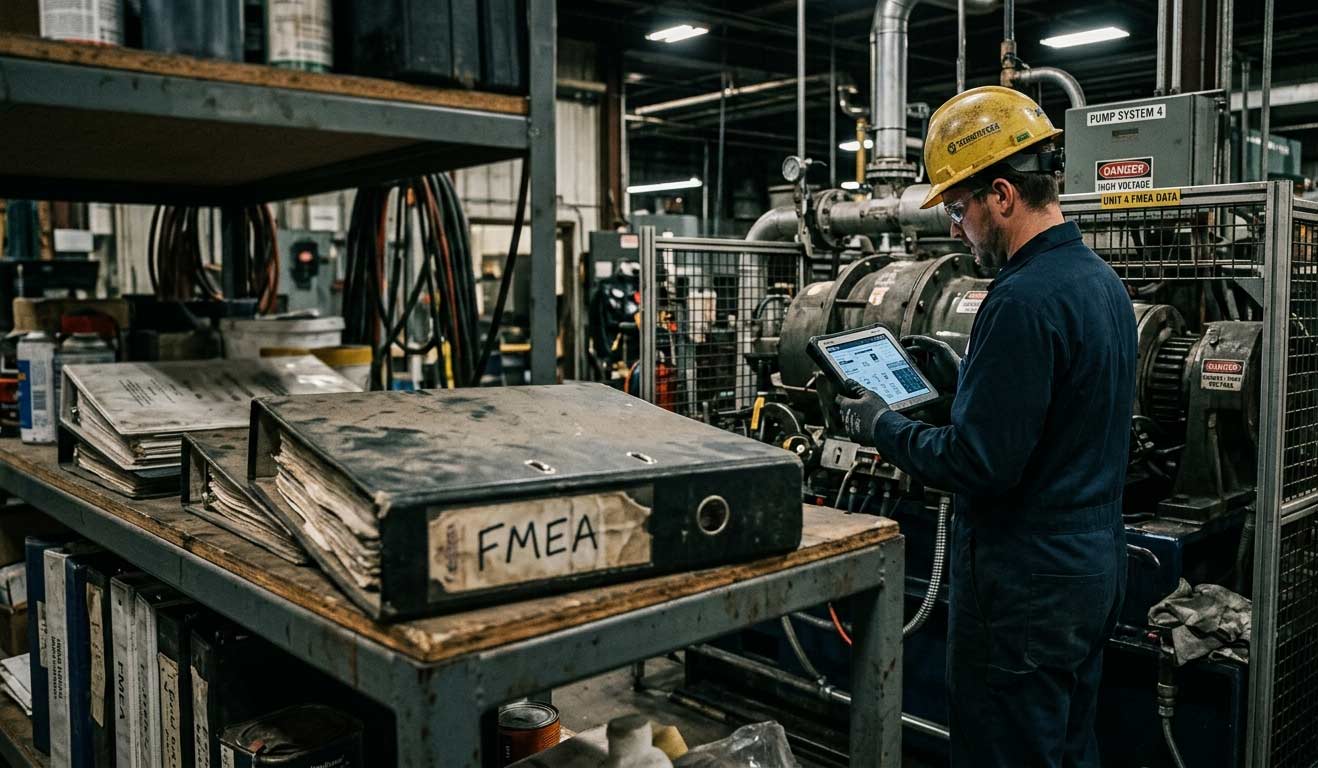
Why Your FMEA Is Sitting in a Binder (And What It Should Be Doing Instead)
Most facilities have an FMEA — but it’s collecting dust in a binder instead of driving decisions on the floor. Here’s how to turn your risk analysis into a living tool that actually protects uptime.

2026-04-24
CMMS Features and Functionality: What to Look for in a Maintenance Management System
Not all CMMS (Computerized Maintenance Management System) platforms are built the same, and in industries like quarrying, aggregates, cement, and ready-mix concrete, there are certain capabilities that carry more weight than others. The CMMS features that matter most for maintenance teams in asset-intensive industries include things such as centralized asset data, work order automation, preventive and predictive scheduling, digital checklists, deviation management, fleet optimization, and mobile-first design with offline capability.

2026-04-24
Cement Plant Inspection Checklist: What to Check, When to Check It, and Why It Fails
Most unplanned shutdowns in a cement plant don’t come out of nowhere. There’s usually a trail beforehand. Maybe a kiln bearing that’s been running 15 degrees above baseline for three weeks, noted by the operator on shift but never formally flagged because it hadn’t tripped an alarm yet. The issue isn’t a lack of warning, its that small deviations are often tolerated until they tip over into something serious.

2026-04-01
How to Choose the Right Work Order App for Your Industry
When something breaks on site, the fix gets most of the attention, but it’s rarely where things go wrong. What’s just as critical is everything around it: who reported it, who picked it up, what got missed between shifts, and how long it sat before anyone acted. In many operations, that whole flow is still held together by paper forms, radio calls, and memory.