
Author
Anju Khanna Saggi
Content & Media Relations

Contributing specialist
Andrew Hogg
Operation & Maintenance Engineering • Maintenance Digitisation • Operational Excellence • HSEQ Management
Published: 2025-05-09
Last updated: 2026-10-13
Preventive maintenance is the practice of inspecting and servicing equipment on a planned schedule or trigger, such as calendar dates, operating hours or tonnage, so that small issues are found and fixed before they cause a breakdown. It replaces "fix it when it breaks" with planned work. The result is less unplanned downtime, longer asset life, lower repair costs and fewer safety incidents.
Essentially, it's a maintenance strategy to prevent a breakdown, accident, or injury.
Key takeaways
- Preventive maintenance means servicing equipment before it fails, on a set schedule or a trigger such as operating hours, odometer readings or tonnage.
- It reduces unplanned downtime, extends asset life, lowers repair costs and cuts the risk of accidents caused by faulty equipment.
- Reactive maintenance fixes equipment after it breaks. Predictive maintenance uses live condition data, such as vibration or temperature, to time the work.
- There are six main types: time-based, usage-based, condition-based, risk-based, predictive and prescriptive. Most sites start with time-based and usage-based routines, then add the others.
- The right strategy depends on your operational needs, how critical each asset is and the resources you have.
- A preventive maintenance program is built in seven steps: set goals, map your assets, write job plans, schedule long-term and short-term work, train your team and review the results.
- Preventive maintenance software brings schedules, mobile checklists, deviations and work orders into one platform, so nothing depends on paper or memory.
In this guide, we cover everything from the different types of preventive maintenance to building an efficient, future-proof maintenance plan for heavy industries using preventive maintenance software like CheckProof.
Manufacturers and maintenance professionals face many challenges, but the overarching goal for every single one is to maximize asset availability and eliminate unplanned downtime.
Therefore, preventive maintenance is vital for optimal maintenance management and the efficiency of your facility's maintenance work. But what does that mean, exactly?
What is preventive maintenance?
Preventive maintenance is a discipline that helps stop problems at the source. Instead, preventive maintenance encourages stepping in ahead of time, doing checks and small procedures to keep on top of your assets, before an issue arises.
The overall goals of preventive maintenance are to enhance asset lifespan, reduce critical breakdowns and minimize production loss. Traditionally, you'd have to choose between running the machine to failure or replacing potentially healthy parts earlier than necessary to achieve said goals. But both methods can be ineffective, time-consuming, and costly. Running an asset to failure leads to irreparable damage and safety risks, while frequently replacing parts turns into increased replacement costs and more planned downtime.
The definition of preventive maintenance is the practice of routinely inspecting and proactively maintaining your equipment to detect minor issues and fix them before they turn into machine failure. For example, setting a preventive maintenance schedule based on calendar dates or triggers, such as operating hours or running time. This way, you rarely run a machine to failure or replace parts before you need to, which is a core benefit of using a preventive maintenance system.
Industry examples of preventive maintenance
Those involved in quarry production plants will be well-acquainted with the necessity of preemptively greasing and lubricating equipment. For instance, bearings on a conveyor belt require regular lubrication checks to prevent overheating, jamming or eventual breakdowns.
To others, an example that typically resonates is keeping on top of servicing your car: oil, fluid, and gas checks and ensuring all parts are running as they should before becoming a greater problem.
Why is preventive maintenance important?
Preventive maintenance matters because unplanned breakdowns cost more to fix, stop production at the worst possible time and put people at risk.
Unplanned downtime in the construction materials industry is a big no-no. Most industries will have scheduled maintenance days but having a breakdown in between scheduled maintenance days is highly undesirable. A busy quarry can be low on stock, and a breakdown can affect availability as well as the whole value chain to the end customer.
A breakdown can also pose a health and safety risk, with faulty machinery causing an accident or grave injury.
Many facilities still apply the old "if it ain't broke, don't fix it" philosophy to their industrial maintenance practice. But this simply doesn't do the trick anymore. Relying on reactive maintenance puts your whole business at risk. Did you know retroactively fixing broken equipment costs you ten times as much as implementing regular maintenance routines? Preventive maintenance checks and services keep your assets in optimal condition for production, reduce unplanned downtime and minimize repair costs. Here are the five most beneficial outcomes:
1. Improved asset lifespan
The more operating hours you can get from an asset, the more efficient your production will be. And it goes without saying that an asset in good condition will run longer than one that isn't. If you fix a piece of equipment only after it breaks down, it'll experience significant wear and tear. This, in turn, leads to other malfunctions that ultimately impede its longevity and cause premature failure.
By keeping track of your assets' upkeep history with preventive maintenance software, you can identify trends in erosion and make informed decisions.
2. Minimized risk of breakdowns
Most benefits listed here occur primarily because of a lowered risk of breakdowns, making it one of the most valuable outcomes of a preventive maintenance program. Hence, delaying servicing until machine failure indirectly impacts your facility's total productivity.
3. Increased efficiency & optimizing resources
Assets kept in optimal condition will operate at optimal efficiency. The best way to measure a piece of equipment's efficiency is by using Overall Equipment Effectiveness (OEE) as a KPI for your preventive maintenance program. OEE measures assets in three categories: performance, quality, and availability.
- Availability: Choosing preventive over reactive maintenance leads to less overall downtime and increased availability.
- Performance: Performance is maximized when your asset runs at its designed capacity.
- Quality: The state of your assets is in direct correlation with their quality throughput. An asset in better condition will yield higher-quality output.
4. Decreased unplanned downtime
Maintenance will always be a necessity in heavy industries. Therefore, a certain amount of downtime is unavoidable. You can, however, reduce it by proactively scheduling preventive maintenance in accordance with the needs of your operations. When you act reactively, downtime comes unannounced and might thus be drawn out by waiting for specialized equipment or mechanics.
In other words, it's best to schedule downtime in line with your needs instead of your equipment scheduling it for you.
5. Elevated health and safety and regulatory compliance
There is significant risk associated with operating faulty equipment, which means that preventing machine failure is synonymous with preventing accidents. Therefore, working proactively is a fundamental part of your ongoing safety efforts.
To solidify your preventive maintenance program, you can use a preventive maintenance system, such as a computerized maintenance management system (CMMS) to oversee the assets in your facility through one digital hub. A preventive maintenance system will also help you track the state of your equipment and its maintenance data, allowing you to make better and more informed preventive decisions.
Preventive vs reactive vs predictive maintenance
Reactive maintenance fixes equipment after it fails. Preventive maintenance services it on a set schedule or trigger before it fails. Predictive maintenance uses condition data, usually from sensors, to service it when the data shows a problem developing.
Reactive
Preventive
Predictive
When work happens
After a failure
Before failure, at planned intervals
When condition data shows wear developing
What triggers it
A breakdown or reported fault
Calendar date, operating hours, odometer or tonnage
Sensor readings outside a set range, e.g. vibration or temperature
Data needed
None
Asset list, OEM recommendations, maintenance history
Continuous condition data and analysis
Setup effort
Low
Medium
High
Main risk
Unplanned downtime, secondary damage, safety incidents
Some servicing done earlier than strictly needed
Depends on sensor coverage and data quality
Quarry example
Replacing a conveyor bearing after it seizes and stops the line
Greasing conveyor bearings at a fixed operating-hour interval set from OEM guidance
Planning a bearing change when vibration readings trend above baseline
It could be useful, for example, to understand the difference between preventive vs predictive maintenance in more depth.
Types of preventive maintenance
Many people use preventive, predictive and prescriptive maintenance interchangeably. But while all of them fall under the preventive scope, they differ in execution. We divide the different types into six categories: time-based, usage-based, condition-based, risk-based, predictive and prescriptive, starting with the simplest.
Time-based (calendar-based) maintenance (TbM)
As the name implies, this strategy is based on fixed intervals. It could be daily, weekly, monthly or yearly, depending on the asset and your production cycle. It is easy to implement and helps keep work organized, especially when handled through preventive maintenance scheduling tools. CheckProof's Planning Tool, for example, is designed to simplify scheduling and give full visibility of all your teams and tasks at hand. Servicing your conveyor belt every three months is an example of calendar-based or time-based maintenance. Essentially here, time is the trigger.
This is maintenance that will be carried out regardless of what the state of your asset is. Although a common method, it's also a process that is resource-heavy, as it can involve superfluous checks or, at the other extreme, result in insufficient maintenance and equipment breaking between scheduled maintenance dates.
However, time-based maintenance is still preferred over reactive care and acts as a minimally viable level of maintenance for heavy industries.
Example: Heavy machinery and OEM equipment often have set dates and time intervals for checks. It fulfills a function as it still ensures a check happens with continuous intervals.
Usage-based maintenance (UbM)
Usage-based maintenance is the practice of employing triggers based on the usage of assets. The method enables you to set up routines and schedules around actual use and predefined parameters, facilitating just-in-time maintenance that reduces costs and prevents asset failure. For example, you can set up triggers that activate after a specific amount of active running time or production.
When the trigger is the actual condition of the asset rather than how much it has been used, it is condition-based maintenance, covered in the next section.
Example: An example is tracking the tonnage that passes over a conveyor belt. After the conveyor belt has handled 10,000 tons, you will want to set a trigger to ensure a maintenance check is done.
Usage-based maintenance is especially beneficial when you implement a CMMS or preventive maintenance software that tracks asset use and automatically creates a task or set of actions for your employees to complete when a threshold is triggered. In CheckProof, routines can run on nine interval types, including odometer-based intervals.
Condition-based maintenance (CBM)
Condition-based maintenance (CBM) means doing maintenance when the measured condition of an asset shows it is needed, instead of at a fixed date or usage count. You set a limit for a measurement, such as temperature, vibration, wear or oil quality, and the work is triggered when a reading crosses it.
The condition data can come from two places:
- Sensors and connected machines: continuous readings such as bearing temperature, vibration or hydraulic pressure, streamed from telematics or the control system.
- Inspections and rounds: readings your frontline team takes and records, such as liner thickness, belt wear or oil sample results.
That second source matters. Condition-based maintenance does not have to start with sensors. Many sites begin by recording measurements during routine inspections and setting limits on them.
Example: A crusher's manganese liners are measured during a monthly inspection. When the thickness falls below the limit set from OEM guidance, a liner change is planned for the next scheduled stop. Another example is a conveyor drive gearbox: if its oil temperature rises above a set level, it is checked before the bearing fails.
Condition-based maintenance avoids replacing parts that still have life left, which is the main weakness of time-based maintenance. The trade-off is that you need reliable measurements and clear limits for each asset.
Condition-based vs predictive maintenance: the two are closely linked. Condition-based maintenance acts when a reading crosses a set limit today. Predictive maintenance analyzes trends in the same data to forecast when that limit will be reached, so work can be planned further ahead.
In CheckProof, data streamed from connected machines can be checked against set limits. When a value is out of range, it is flagged and turned into a work order for immediate action
Risk-based maintenance (RBM)
This is the practice of prioritizing maintenance routines towards your most valuable assets. If key machinery or assets break down, it could put a strain on resources, such as time and the bottom line. Risk-based maintenance categorizes your maintenance tasks based on the risk each asset poses to entire production lines if it is left unchecked.
Example: Typically, in a processing plant, the most expensive and more complex parts, such as crushers, will need specialists to come in and fix an issue. So, this type of equipment often has risk-based maintenance applied to it, as the cost of unexpected downtime and rushing out specialist personnel to resolve sudden issues will be high.
A failure mode and effects analysis (FMEA) is a practical way to rank which assets carry the most risk. Read more in Why your FMEA is sitting in a binder.
Predictive maintenance (PdM)
The concept of predictive maintenance itself is not new. But the advancement in technology and the Internet of Things facilitates a new way of working predictively where sensors, algorithms and data help you anticipate when servicing is due. And when you create routines based on data, you enable your frontline team to carry out maintenance exactly when needed: not too early nor too late. According to the U.S. Department of Energy, predictive maintenance provides savings of up to 40% over reactive maintenance.
To get the most out of modern predictive maintenance using IoT, you need to adopt preventive maintenance software, or a CMMS system that collects historical data from assets and makes it accessible to employees. Your site managers can review the data to identify upkeep trends and patterns, enabling them to predict when downtime will occur, and schedule maintenance to prevent or minimize it.
PRO INSIGHT: Curious about how predictive maintenance works in practice?
Construction material supplier Swerock wanted to perform their preventive maintenance inspections on time, but not too early or more of it than necessary. To achieve this, they implemented automatic monitoring of predefined parameters for vibrations and temperature of their assets to detect maintenance needs in time. They already see a great cost and time-saving potential: "Our employees no longer need to physically go out to each machine and make a subjective assessment of its status. This gives us more time for tasks that require hands-on effort." Swerock has reduced its maintenance costs by 33%.
Prescriptive maintenance
Prescriptive maintenance is the most sophisticated type of maintenance. On top of using data to predict downtime and breakdowns, prescriptive maintenance leverages machine learning and artificial intelligence software to pinpoint optimally timed maintenance and provide an outcome-focused suggestion based on the asset's analytics. The software is developed to be able to detect deviations and irregularities in a machine's behavior. When detected, the system flags the anomaly for maintenance. And over time, it learns more and more about the specific asset, creating better recommendations and more specific maintenance schedules.
An example of this would be a preventive maintenance system that collects data, forecasts machine failure, and then automatically schedules the appropriate preventive maintenance checks and services with your technician. Prescriptive maintenance combines technology and strategy to help your team work smarter.
Which preventive maintenance strategy is best for your business?
When evaluating the strategies above, the best preventive maintenance strategy for your business will depend on specific operational needs, asset criticality, and resource availability. It will often boil down to the size of your business including the range of assets you have.
Calendar-based maintenance might incur costs due to potentially unnecessary servicing of low-risk assets but tends to be the more common maintenance method preferred by small to medium-sized companies.
Usage-based maintenance needs reliable meter readings, such as operating hours, odometer values or tonnage. It suits sites that already log equipment use, and costs rise when those readings come from sensors rather than manual entry.
Condition-based maintenance suits assets where wear varies a lot with load or material, such as crusher liners and conveyor components. It can start with measurements taken during inspections and grow as more machines are connected.
Risk-based maintenance offers a midway solution regardless of company size, as it ensures your most valuable assets don't come to a standstill.
Predictive and prescriptive maintenance need sensors, connected systems and clean data. Most sites add them once their time-based and usage-based routines are running well.
With CheckProof, regardless of the maintenance strategy you choose, the platform will accommodate your business. The customizable platform supports real-time integration for usage-based maintenance, scheduled reminders and checklists for calendar-based maintenance and tools for prioritizing tasks in risk-based maintenance, ensuring efficient execution and monitoring of all maintenance activities from one single platform.
What is planned preventive maintenance (PPM)?
Planned preventive maintenance is a structured approach where activities are scheduled in advance, often on a regular basis. Unlike reactive maintenance, which responds to problems as they occur, PPM aims to avoid failures and reduce downtime by maintaining equipment before issues arise.
Implementing planned maintenance often involves a detailed schedule, predefined inspection lists, and trained staff or contractors. Many businesses use preventive maintenance software to ensure these activities are completed on time and recorded consistently.
How to create a preventive maintenance program
To create a preventive maintenance program, set your goals, list your assets and rank them by criticality, write job plans for each task, build long- and short-term schedules, train your team, and review the results. The seven steps below cover each stage.

To implement a successful preventive maintenance program, you need to identify what tasks need to be performed, how often, and by whom. A well-thought-out preventive maintenance program needs to be balanced, protect your company's assets, reduce upkeep costs and ensure a smooth operation. And this requires planning, scheduling, and coordination across several departments. Whether you're overhauling an existing program or designing a new one, consider starting with these key steps:
1. Set your goals and priorities
First you need to define your plan's purpose. What do you hope to accomplish? To save money or prevent accidents? You must design tasks, methods and priorities in accordance with organizational goals. If you want to maximize uptime, you might devise your plan in ways that reduce unplanned downtime and breakdowns. If your organization's end goal is to eliminate accidents in your workplace, you might focus on increased planned maintenance and safety tracking.
2. Do an inventory of assets and determine their hierarchy
What assets are most critical to your operation? The second step of your preventive maintenance plan is to take stock of all your assets and map out their hierarchy (the relationship between essential and non-essential units).
Your team must first determine the total cost of ownership for each asset and the impact on safety should a component break down. Secondly, divide equipment into families and establish parent-child (mindmap) relationships between them. When creating an asset hierarchy, you should include information such as location, type of equipment (e.g. hot water boiler), and the parts that make up the asset.
Example:
- Location: Building 8
- Equipment Family: Hot Water Boilers
- Asset: Hot water boiler #1
- Brand/Manufacturer: Boilers Manufacturers, Ltd.
- OEM recommendation: general maintenance one month before the cold season. A general inspection is recommended every three months at the time of most significant use.
- Last inspection: date of the most recent inspection
- Legal requirements: n/a
In CheckProof, this structure maps to a Site, Section, Round and Unit hierarchy, so every asset sits in the right place from day one.
3. Define Tasks & Job Plans
Job plans are lists that contain the scope of work and the tools needed to do the job and should be part of every preventive maintenance plan. They help organize employees and keep them efficient and accountable. Planning and scheduling are the most vital parts of preventive maintenance.
Your job plans should therefore include:
- A step-by-step instruction on how to complete the task
- A list that specifies what tools are required
- A list that specifies what skills are required
- A list of materials and parts
- Visuals (e.g. photographs or diagrams)
- Operating procedures for the task at hand
- Safety instructions for the task at hand
4. Schedule for the long-term
Use a preventive maintenance scheduling tool to oversee a yearly maintenance schedule for each asset based on the data you collected from your hierarchy sessions and mapping, maintenance history, and OEM recommendations. Divide the yearly schedule into daily, weekly, monthly, and quarterly tasks. A CMMS will help you automate processes and keep track of your schedules.
You want to include as many critical assets as possible in your long-term schedule. This ensures minimal error and that the main components of your organization are always covered.
5. Schedule for the short-term
You've now established your long-term schedule, which includes the most vital maintenance work throughout the year. Now you can start planning for the foreseeable future, such as weekly tasks. To ensure thoroughness, layer your short-term maintenance schedules with your long-term ones.
Tips for a short-term schedule:
- Prerequisites: How many people are needed to complete a job plan? How many person-hours does it require? And how long will it take (full day, three days, etc.)?
- Scheduling success factors: Measure the performance of job plans by analyzing the scheduling process. Are tasks completed on time? Are your tasks contributing to your end goals? Always strive for continuous improvement by reviewing and improving your scheduling over time.
6. Train your employees
Having a great preventive maintenance plan in place means nothing if your employees can't or won't follow it. Hence, ensure that each employee knows how to perform their tasks and follow their maintenance schedules, and understand why preventive maintenance is essential. In addition to performing tasks correctly, you prevent wasting time on trial and error, accidents that come from ignorance, and wear and tear due to improper handling of equipment.
7. Documentation & Review
Track every action taken using a preventive maintenance system to monitor performance over time. Then, regularly analyze the collected data to identify improvements or cost savings.
Sample preventive maintenance schedule
Below is a sample schedule for a typical aggregates crushing and screening plant. Use it as a starting point and adjust intervals to OEM recommendations, operating hours and site conditions.
Frequency
Example tasks
Typical assets
Daily (pre-shift)
Walkaround inspection; check for leaks, damaged guards and loose fasteners; check oil levels and temperatures; test pull-cords and emergency stops in line with site procedure
Crushers, conveyors, screens, mobile equipment
Weekly
Grease bearings to OEM guidance; check belt tracking, idlers and scrapers; inspect screen media for wear and blinding; check drive belt tension
Conveyors, screens, crusher drives
Monthly
Measure crusher liner wear; inspect hydraulic hoses and fittings; check electrical cabinets and cables; review and close open deviations
Crushers, hydraulic systems, electrical
Quarterly
Take oil samples for analysis; inspect belt splices and pulley lagging; calibrate belt scales
Gearboxes, lube systems, conveyors
Annually
Full shutdown inspection; structural checks on chutes, walkways and supports; plan liner and major component replacements
Whole plant
Preventive maintenance software and tools
The best preventive maintenance software for heavy industry combines scheduling, mobile checklists, deviation and work order tracking and full asset history in one platform that also works offline on site.
To be able to utilize preventive maintenance to the fullest, you need modern technology, primarily analytical and integrative software. This type of software will help you automate processes and enable the collection of real-time data and establish traceability and communication between assets. Preventive maintenance software keeps a detailed and centralized record of all maintenance activities for each asset in your facility and allows you to manage and automate tasks, checklists, reporting, processes and documentation. An effective CMMS tool will allow you to:
- Control your maintenance calendar by automatically creating tasks based on triggers and parameters such as usage or time. You can also program it to produce detailed instructions and how-to documents required to execute tasks correctly.
- Monitor multiple assets and facilities from anywhere through a centralized platform. It also enables you to monitor real-time information about your assets, such as temperature, fuel usage and quality output.
- Track and analyze maintenance data over time to continuously improve and optimize your routines. The data gives you actionable insights into when the optimal time for maintenance for a specific asset is.
- Connect your frontline teams with a system that allows them to access routines, documentation, checklists and reporting on-site.
- Integrate existing systems and stream their data directly into your CMMS, giving you full control over several systems through one platform.
When integrated with sensors and IoT technology, this software can provide real-time insights and trigger tasks before faults develop.
Benefits of using CheckProof for your preventive maintenance program
CheckProof is a platform uniquely designed for heavy industries that helps teams move away from reactive fixes and into proactive, preventive operations. Here's how it supports your preventive maintenance program:
- Mobile app: Perform inspections and register maintenance tasks from your phone or tablet.
- Custom checklists: Standardize preventive maintenance inspections for consistent quality.
- AI Checklist Builder: Create new checklists quickly and roll them out across sites with Master Checklists.
- RFID tags: Verify that the inspection was done at the asset itself.
- Deviations and work orders: Issues flagged during rounds can be tagged and turned into work orders, so nothing gets lost between shifts.
- Digital documentation: Keep track of all checks, routines, documentation, reporting and maintenance logs in one place.
- Alerts and reminders: Get notified when tasks are due, reducing missed inspections.
- Data analytics: See trends over time and improve scheduling and resource allocation.
- Connect your machines and existing systems to one platform. This also allows you to stream assets' real-time telematics data straight into CheckProof.
- Keeps your assets in optimal condition: increasing their lifespan and improving your facility's productivity by conducting maintenance at the optimal time for each piece of equipment.
- Use the data from your assets to define usage and value parameters, and set relevant triggers that automatically flag deviations, create tasks and notify you when maintenance is due (and with checklists on how to perform it).
Whether you're a quarry operator, cement plant manager or asphalt producer, CheckProof gives you the control and visibility to implement a truly effective preventive maintenance program.
Book a demo
Frequently asked questions on preventive maintenance
Want to know what CheckProof can do for you?
CheckProof's easy-to-use app makes it easier to do the right thing at the right time. Discover how you can run world-class maintenance that is both cost-effective and sustainable.
Book a demo
2026-09-29
The AggNexus 2026 Report: Highlights from the Digital Innovation Conference
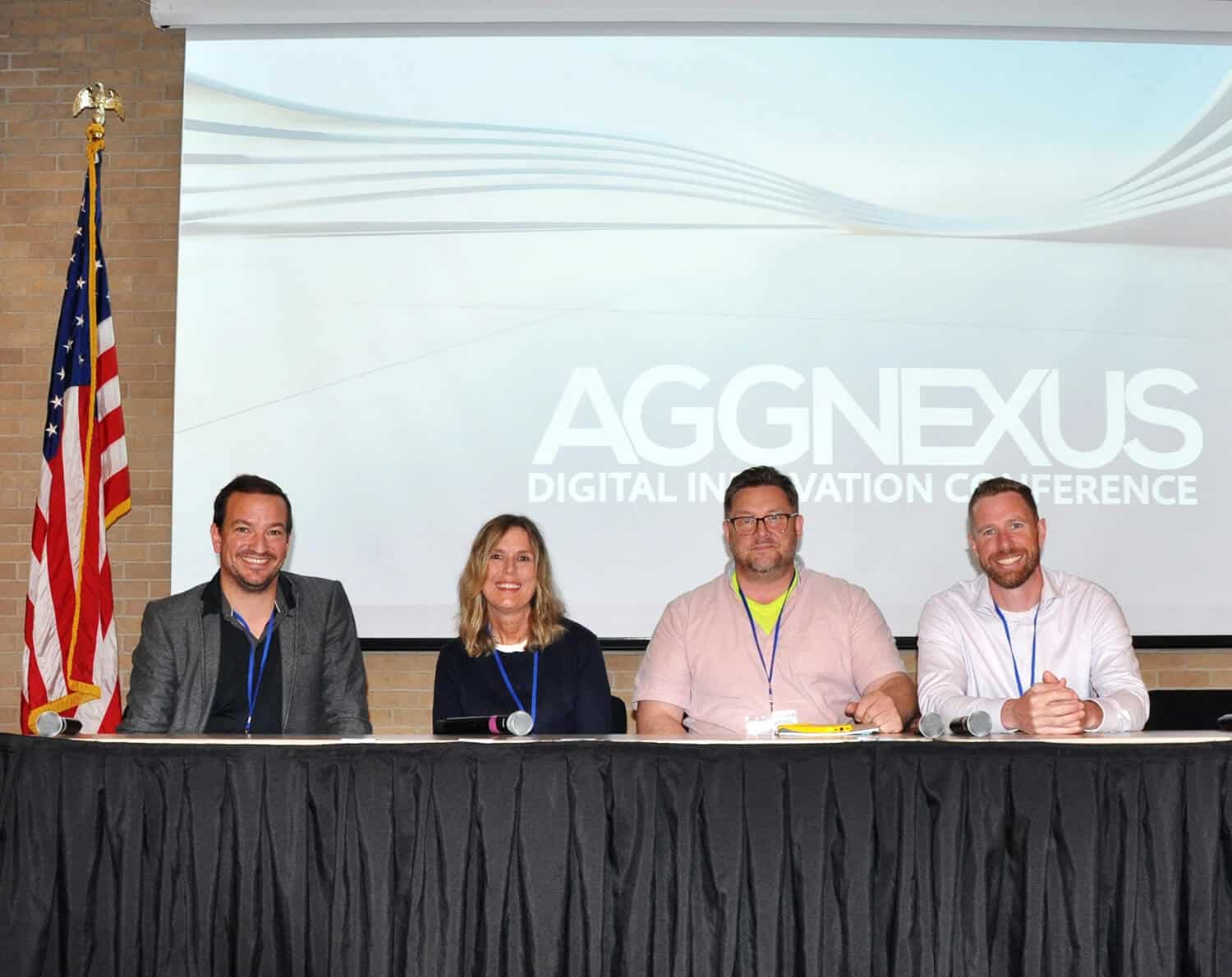
AggNexus 2026 in Austin was the biggest edition yet. After a year of AI first steps, the focus shifted to how to get people to change. Here are CheckProof’s key takeaways on change management, fast-moving AI, compliance and passing on know-how.

2026-09-24
A Stronger Foundation: Rohrdorfer on Digitizing Safety and Efficiency
Rohrdorfer, a leading construction materials producer in five countries, has used CheckProof for years to streamline safety, maintenance and quality work and to sharpen its customer focus.

2026-07-10
10 Must-Have Features for an Incident Management Platform in the Heavy Industry
When an incident happens, every minute matters. A near miss, equipment damage, or a hydraulic leak can quickly become a bigger risk if the issue is not reported, investigated, and followed up properly. When an incident happens, every minute matters. A near miss that goes unreported, or a fault that isn’t followed up, can quickly become a bigger risk if the issue is not reported.

2026-07-09
The Benefits of a Quarry Crusher Management Software
Paper forms, scattered systems, and knowledge locked in one person’s head all delay the same thing: catching crusher problems before they become breakdowns. This piece covers the four biggest challenges in crusher operations and how CheckProof brings inspections, maintenance, and issue tracking into one place.

2026-07-06
Hillhead 2026 – The CheckProof Report
Hillhead 2026 broke every record with 627 exhibitors and three days packed with electric machinery, connected intelligence, and sustainable innovation. CheckProof was on the ground as an exhibitor and sponsor — here’s what our team took away from the show floor.

2026-06-12
Brice Aggregates: What Operational Excellence Looks Like at a Needingworth Quarry
The inaugural CheckProof Industry Excellence Award winners on going digital from the ground up, and the moment their frontline teams bought in.
2026-05-07
Why Your FMEA Is Sitting in a Binder (And What It Should Be Doing Instead)
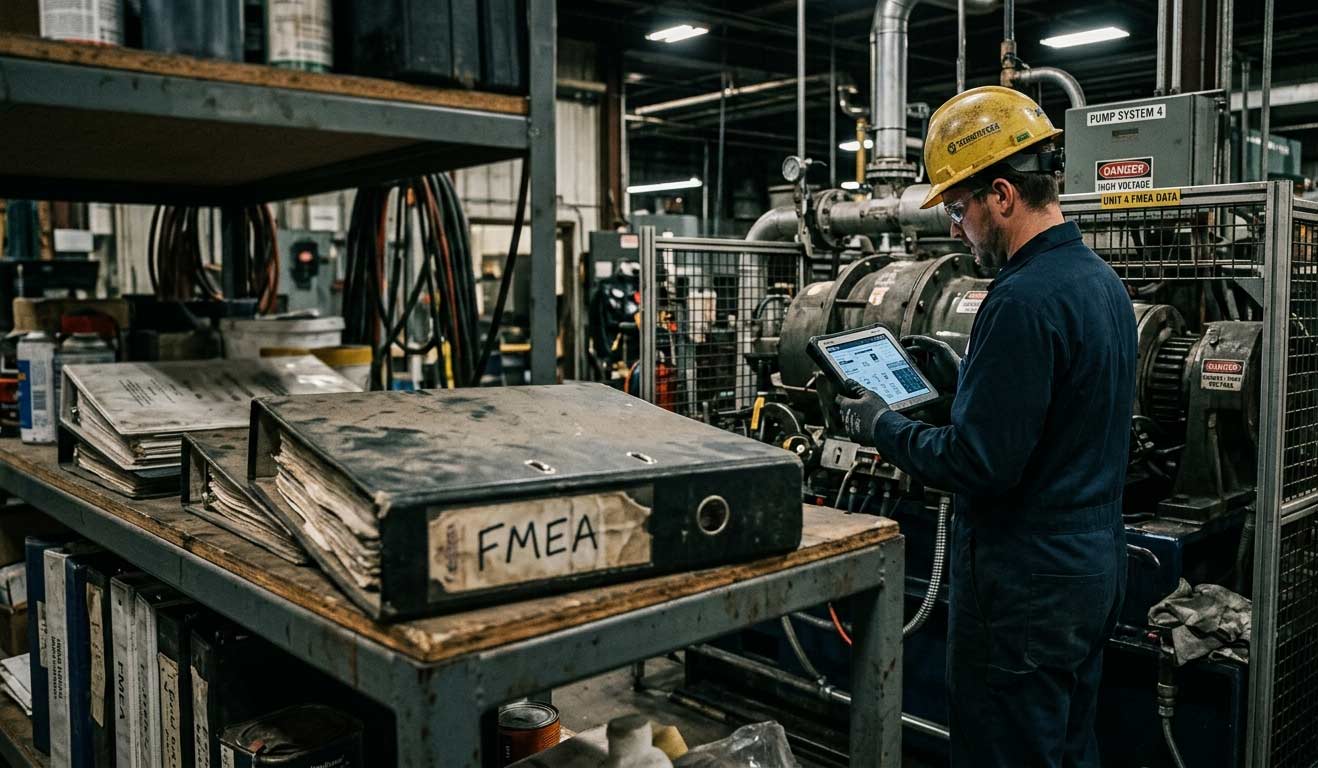
Most facilities have an FMEA — but it’s collecting dust in a binder instead of driving decisions on the floor. Here’s how to turn your risk analysis into a living tool that actually protects uptime.

2026-04-24
CMMS Features and Functionality: What to Look for in a Maintenance Management System
Not all CMMS (Computerized Maintenance Management System) platforms are built the same, and in industries like quarrying, aggregates, cement, and ready-mix concrete, there are certain capabilities that carry more weight than others. The CMMS features that matter most for maintenance teams in asset-intensive industries include things such as centralized asset data, work order automation, preventive and predictive scheduling, digital checklists, deviation management, fleet optimization, and mobile-first design with offline capability.

2026-04-24
Cement Plant Inspection Checklist: What to Check, When to Check It, and Why It Fails
Most unplanned shutdowns in a cement plant don’t come out of nowhere. There’s usually a trail beforehand. Maybe a kiln bearing that’s been running 15 degrees above baseline for three weeks, noted by the operator on shift but never formally flagged because it hadn’t tripped an alarm yet. The issue isn’t a lack of warning, its that small deviations are often tolerated until they tip over into something serious.

2026-04-01
How to Choose the Right Work Order App for Your Industry
When something breaks on site, the fix gets most of the attention, but it’s rarely where things go wrong. What’s just as critical is everything around it: who reported it, who picked it up, what got missed between shifts, and how long it sat before anyone acted. In many operations, that whole flow is still held together by paper forms, radio calls, and memory.