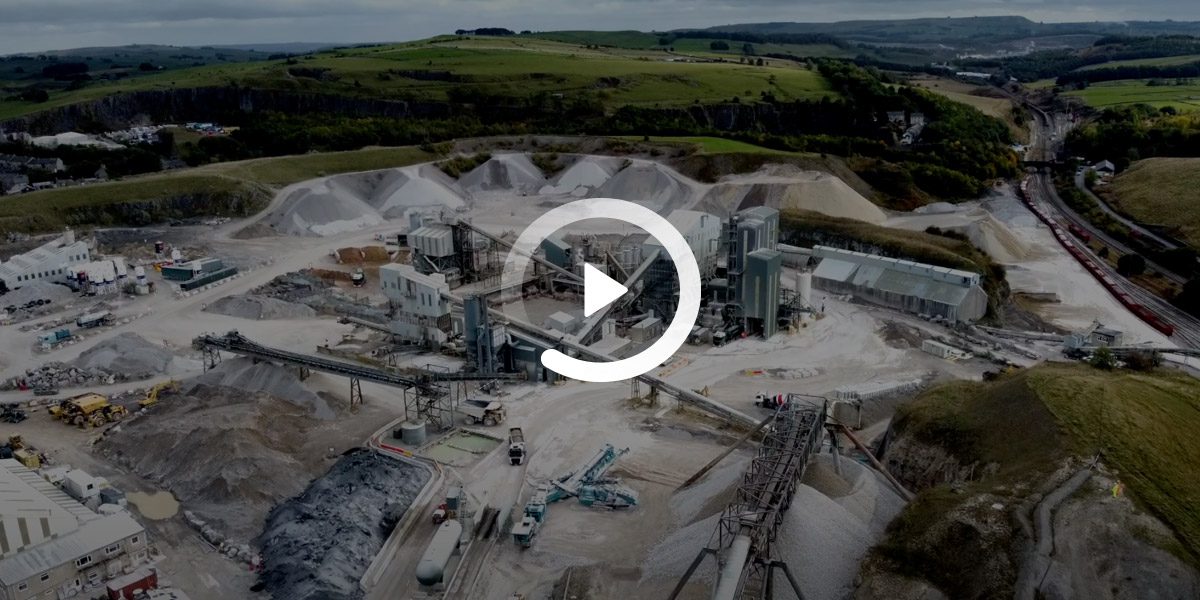
In a quarry, the crusher is the heart of the operation. When it goes down unexpectedly, everything backs up with trucks queueing, stockpiles running low, and the day's targets slipping away. Paper inspection sheets and scattered maintenance records make those risks hard to manage. The simplest, and most available, solution is using a maintenance system that is uniquely designed to handle the specific challenges of crushers within a quarry environment, and this is where quarry crusher management software system can make a real difference. It gives operators visibility into equipment health, maintenance activity, and production risks of the quarry crushers before they turn into costly downtime.
Key Takeaways:
- Crusher downtime doesn't stay contained, it affects loading, hauling, and dispatch, and emergency repairs almost always cost more than planned ones.
- Costs pile up when it takes longer to report an issue, which is why paper-based inspections create risk by the delay they cause.
- When inspection records, maintenance logs, and work orders are split across different systems, it's hard to know which assets need the most attention.
- Crusher management software centralizes inspections, maintenance, and issue tracking so problems can be caught and acted on before they become breakdowns.
- A major operational gain by digitizing paperwork, is the time saved between spotting a problem and fixing it.
The Biggest Challenges in Crusher Operations
Unplanned downtime
A failed bearing, damaged conveyor, or blocked screen can stop production with little to no warning. These types of issues are often only discovered during inspections or after a breakdown has already occurred, by which point the only option left is reactive repair rather than planned maintenance. As the main production relies on the crusher, a stoppage there doesn't stay contained to one piece of equipment, it impacts everything downstream of it.
Operational impact:
- Production targets slip and hauling schedules back up
- Emergency repairs cost more than planned maintenance (labor and spare parts)
- Missed deliveries put customer relationships under pressure
Paper-based inspections
Pre-shift checks are critical, but paper forms often remain in a binder until the end of the shift. By then, a minor issue may have become a major repair. The problem isn't that operators aren't noticing issues, it's that the gap between noticing and reporting is too long, and during that gap small defects keep running under load and getting worse.
Operational impact:
- Delayed reporting turns small, inexpensive fixes into large, expensive ones
- Paper records are easy to lose or fill in consistently, weakening audit trails
- Time spent transcribing paper forms into other systems reduces time left over for maintenance
Poor visibility across assets
Crushing plants often run several pieces of fixed equipment together as one system, including primary and secondary crushers, screens, conveyors, feeders, and stackers. When inspection records, maintenance logs, and work orders for all of these live in different systems, it becomes difficult to see which assets are actually creating the most downtime, and maintenance attention often ends up going wherever the most recent issue flagged rather than where the data says it's needed.
Operational impact:
- Maintenance budgets spread thin with no clarity on which assets need attention
- Repeated failures go unnoticed as no one is tracking patterns
- Managers piece together information manually instead of acting on it
Knowledge stays with individuals
Experienced operators are the unsung heroes of most quarry operations, often knowing the warning signs of a developing problem, understanding sound or vibration patterns that means a screen is about to give out. The struggles appear when that knowledge isn't documented and shared across shifts, so it exists only in one person's head rather than being available to the entire team.
Operational Impact:
- Knowledge walks out the door when experienced staff retire, change roles, or leave
- New or temporary staff are more likely to miss early warning signs without documented guidance
- Inconsistent shift handovers create blind spots, increasing the risk of preventable failures
4 Benefits of Using CheckProof’s Software for Quarry Crusher Management
The challenges above return to the same root cause: information that exists somewhere in the operation isn't reaching the people who need it in time to act on it. CheckProof connects these different moving parts by bringing inspections, maintenance, issue reporting, and operational data into one place. From the operator walking the plant to the maintenance manager planning next quarter's shutdown, everyone works from the same real-time information. Here's what that changes on the ground.
Catch problems in time
With CheckProof, operators can complete pre-shift and post-shift inspections on a tablet or mobile device and report issues the moment they're spotted, with photos and comments attached. Instead of waiting for a paper form to be handed in at the end of a shift, maintenance teams can see and act on defects immediately.
Early detection changes the economics. Brice Aggregates estimates £8,000 in monthly procurement savings simply because flagging issues early gave their team time to source parts competitively rather than buying locally in a rush.
View multiple assets’ condition in one place
CheckProof connects inspections, reported issues, maintenance activities, work orders and asset history in a single system. Open defects, completed repairs, recurring failures, and maintenance records stay linked to the equipment they belong to, whether that's a jaw crusher, cone crusher, screen, conveyor, or feeder.
That centralized view helps managers see where downtime originates, identify recurring problems, and prioritize maintenance resources based on actual equipment condition rather than assumptions.
You stop losing knowledge when people leave
Some of the most valuable maintenance knowledge in a quarry stays with experienced operators and technicians. They know the sounds, vibrations, and performance changes that often signal a problem before it becomes visible.
By documenting inspections, observations, and corrective actions in CheckProof, that knowledge becomes part of the operation instead of remaining with one individual. Over time, it builds a searchable history of issues, repairs, and failure patterns that helps new employees learn faster and supports better maintenance decisions.
You make compliance and audits easier
Inspection records, maintenance activities, corrective actions, and supporting photos are stored digitally in CheckProof with timestamps and user records attached.
When regulators, auditors, customers, or insurance providers request documentation, teams can quickly retrieve the information they need instead of searching through binders, spreadsheets, or filing cabinets. The result is a clearer audit trail and less time spent preparing for inspections.
FAQ – Quarry Crusher Management Software
Want to know what CheckProof can do for you?
CheckProof's easy-to-use app makes it easier to do the right thing at the right time. Discover how you can run world-class maintenance that is both cost-effective and sustainable.
Book a demo

2026-07-10
10 Must-Have Features for an Incident Management Platform in the Heavy Industry
When an incident happens, every minute matters. A near miss, equipment damage, or a hydraulic leak can quickly become a bigger risk if the issue is not reported, investigated, and followed up properly. When an incident happens, every minute matters. A near miss that goes unreported, or a fault that isn’t followed up, can quickly become a bigger risk if the issue is not reported.

2026-07-09
The Benefits of a Quarry Crusher Management Software
Paper forms, scattered systems, and knowledge locked in one person’s head all delay the same thing: catching crusher problems before they become breakdowns. This piece covers the four biggest challenges in crusher operations and how CheckProof brings inspections, maintenance, and issue tracking into one place.

2026-07-06
Hillhead 2026 – The CheckProof Report
Hillhead 2026 broke every record with 627 exhibitors and three days packed with electric machinery, connected intelligence, and sustainable innovation. CheckProof was on the ground as an exhibitor and sponsor — here’s what our team took away from the show floor.

2026-06-12
Brice Aggregates: What Operational Excellence Looks Like at a Needingworth Quarry
The inaugural CheckProof Industry Excellence Award winners on going digital from the ground up, and the moment their frontline teams bought in.
2026-05-07
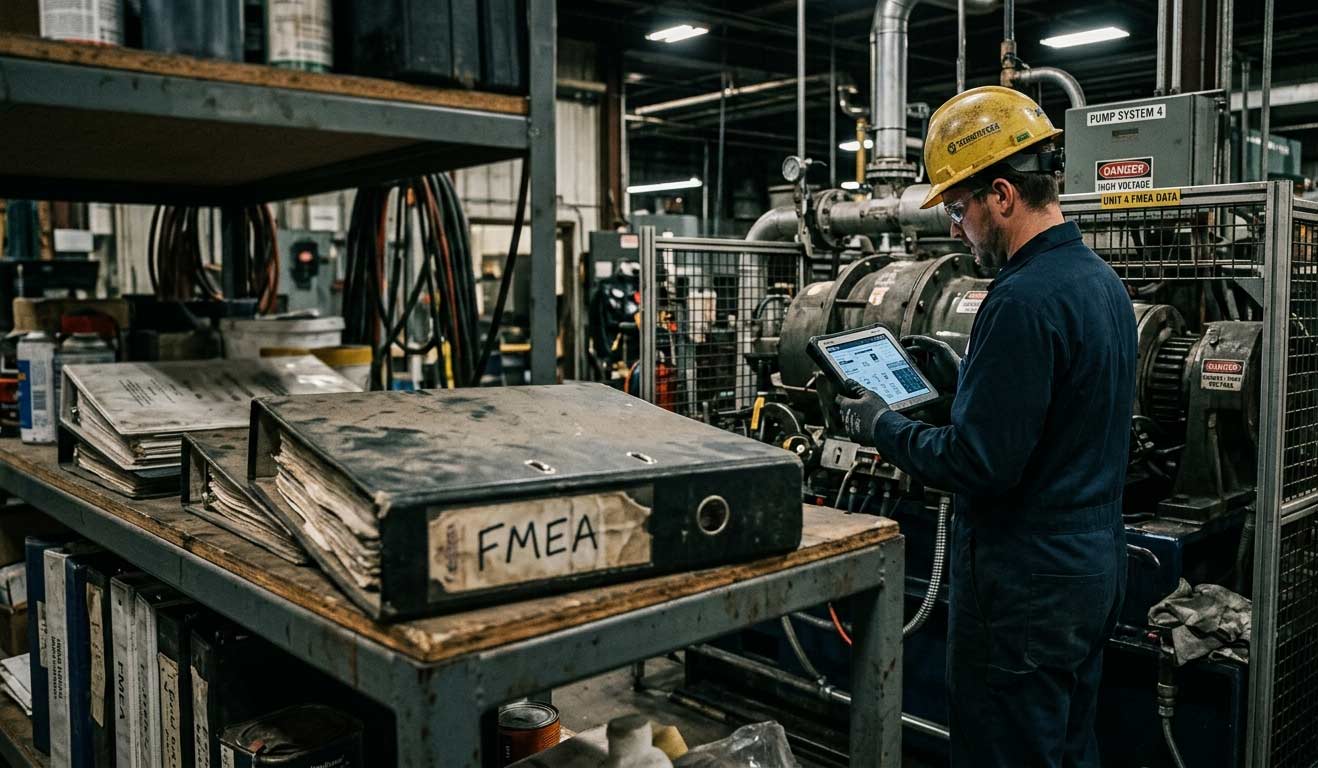
Why Your FMEA Is Sitting in a Binder (And What It Should Be Doing Instead)
Most facilities have an FMEA — but it’s collecting dust in a binder instead of driving decisions on the floor. Here’s how to turn your risk analysis into a living tool that actually protects uptime.

2026-04-24
CMMS Features and Functionality: What to Look for in a Maintenance Management System
Not all CMMS (Computerized Maintenance Management System) platforms are built the same, and in industries like quarrying, aggregates, cement, and ready-mix concrete, there are certain capabilities that carry more weight than others. The CMMS features that matter most for maintenance teams in asset-intensive industries include things such as centralized asset data, work order automation, preventive and predictive scheduling, digital checklists, deviation management, fleet optimization, and mobile-first design with offline capability.

2026-04-24
Cement Plant Inspection Checklist: What to Check, When to Check It, and Why It Fails
Most unplanned shutdowns in a cement plant don’t come out of nowhere. There’s usually a trail beforehand. Maybe a kiln bearing that’s been running 15 degrees above baseline for three weeks, noted by the operator on shift but never formally flagged because it hadn’t tripped an alarm yet. The issue isn’t a lack of warning, its that small deviations are often tolerated until they tip over into something serious.

2026-04-01
How to Choose the Right Work Order App for Your Industry
When something breaks on site, the fix gets most of the attention, but it’s rarely where things go wrong. What’s just as critical is everything around it: who reported it, who picked it up, what got missed between shifts, and how long it sat before anyone acted. In many operations, that whole flow is still held together by paper forms, radio calls, and memory.

2026-04-01
Best Practices for Work Order Management
Efficient maintenance starts with clear work orders. When issues are logged quickly with the right details, photos, and priority, teams spend less time chasing information and more time fixing problems. The result is reduced downtime, smoother shift handovers, and audit-ready operations — even in low-signal or harsh environments where mobile work orders let crews flag issues before they escalate.

2026-03-26
How DAY Group went paperless and transformed maintenance operations with CheckProof
DAY Group Ltd is an independent, family-owned business supplying construction materials and services across the south of England since 1947. Handling over five million tonnes of material annually across divisions including Day Aggregates, Day Glass Recycling, Day Contracting, and Day Equestrian — plus recycling operations processing over 1.5 million tonnes a year — the group operates with close to 200 staff and a large fleet of plant equipment, making uptime, compliance and safety mission-critical.