
Author
Anju Khanna Saggi
Content & Media Relations
Published: 2025-04-25
Last updated: 2025-12-05
Reduce downtime, improve team efficiency, and centralize data with CheckProof’s mobile-first CMMS software
A CMMS or Computerized Maintenance Management System is essential to everyday maintenance management and business operations. Whether you’re new to CMMS software systems, considering an upgrade, or exploring their impact on your business, this article covers everything you need to know.
This article covers:
Speak to a CMMS expert
What is a Computerized Maintenance Management System (CMMS)?
A Computerized Maintenance Management System (CMMS) is software that helps maintenance teams move from reactive fixes to proactive planning. In the absence of CMMS systems, teams often rely on spreadsheets, manual logs, or sticky notes—resulting in disorganization and costly downtime. A modern CMMS solves these challenges by centralizing data, automating maintenance schedules, and aligning field and management teams.
With a CMMS, you can:
- Centralize maintenance data in one accessible platform
- Automate recurring maintenance schedules
- Reduce downtime through proactive planning
- Improve communication between field teams and managers
- Ensure no task slips through the cracks
CMMS software makes maintenance operations more efficient, transparent, and reliable.
Key Features of Our Mobile CMMS Software
To allow CMMS software to serve its primary purpose as an all-encompassing maintenance tool, some features are central. These include:
- Centralized Maintenance Data: All asset histories, work orders, inspection logs, and compliance documents are available in real time, whether you’re in the office or underground in a quarry. With all data centralized in one platform, teams never lose sight of what matters.
- Maintenance & Workflow Management: An effective CMMS system provides visibility across multiple teams and sites, effortlessly tracking, scheduling, and reassigning maintenance tasks. CMMS software integrates preventive and predictive maintenance using an IoT approach, contributing to minimized downtime, and securing higher availability and productivity.
- Resource Optimization: Effective asset maintenance requires effective resource allocation. A central CMMS function is to allocate tasks to team members. Maintenance managers need to be agile in rescheduling tasks if key staff is missing. Accurate and flexible staff scheduling is a crucial part of your business’s overall resource optimization. For example, CheckProof’s Planning Tool addresses this by gathering all scheduled tasks in a single view.
- Asset & Inventory Management: If you’ve experienced piecing together tasks from different platforms to get the full picture of the state of your assets, you surely don’t want to go back. As well as tracking equipment condition, you can see the history of maintenance tasks performed, and lifecycle on one single platform.
- Inspections, Audits & Compliance: The construction materials industry is a heavily regulated one, so a CMMS tool that is tailored toward this segment can ease the burden significantly when conducting audits. Digital checklists, the ability to create a deviation from a checklist when an issue is detected, and following the chain of events in reports pulled from the same system will help businesses stay compliant.
- Analytics, Reporting & Data: Analytics and data will help gain insight into performance, costs and efficiency, and the documented maintenance records will help with reporting and compliance tracking as mentioned above.
Customer success: Real results from the field
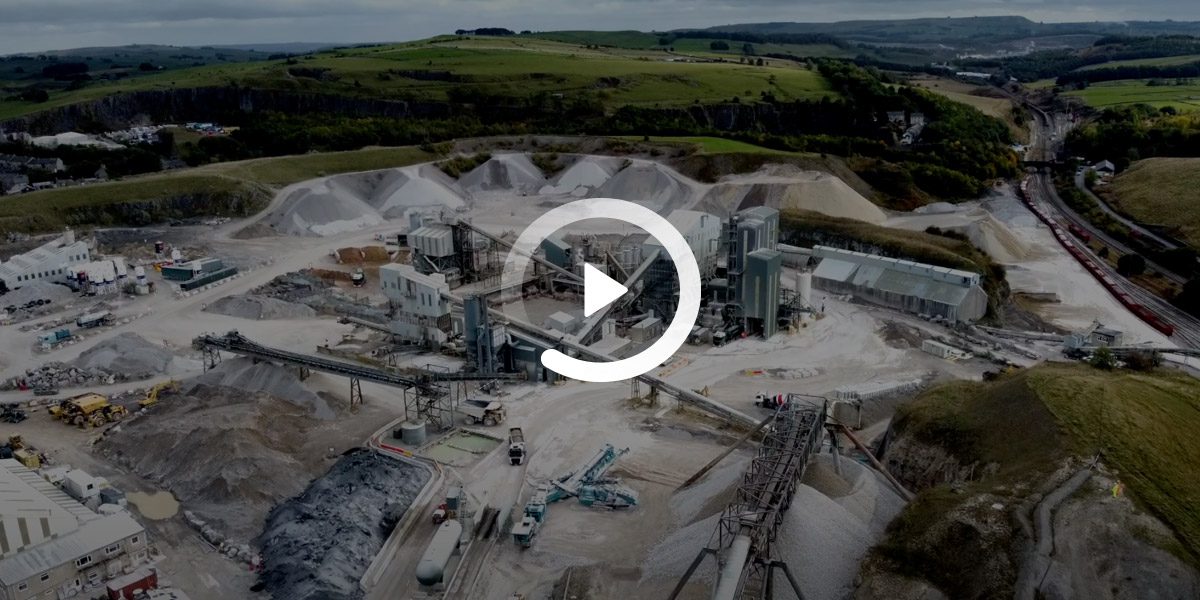
At Heidelberg Materials UK’s Whatley Quarry, CheckProof’s CMMS system proved its value when it helped avoid a potentially catastrophic equipment failure:
“CheckProof identified a shock to a drive-end bearing on our X1 primary crusher’s 1200kW motor—an asset worth up to £200,000,” says Dave Short, Planning Maintenance Engineer.
“If there had been a delay, it could’ve caused serious damage and significant downtime. But with CheckProof, we were able to monitor the issue and carry out repairs in a controlled way—saving tens of thousands of pounds.”
5 Benefits of a CMMS software system
Reduced Downtime & Increased Equipment Lifespan
A CMMS tool helps businesses prevent unexpected breakdowns by automating maintenance schedules. This proactive approach extends asset longevity and reduces downtime.
Enhanced Productivity & Efficiency
Maintenance teams can streamline workflows with automated work orders, reschedule tasks, and reassign assignments to different staff, ensuring tasks are completed on time. A CMMS system improves coordination between teams and departments.
Cost Savings on Repairs & Maintenance
By implementing preventive and predictive maintenance measures, organizations can lower reactive maintenance costs and avoid expensive emergency repairs. CMMS software helps optimize inventory management and reduce unnecessary purchases.
Improved Compliance & Safety Standards
A CMMS system ensures that maintenance records are up to date, meeting industry standards and regulatory requirements. Businesses can demonstrate compliance effortlessly during audits.
Data-driven Maintenance Approach
A CMMS provides real-time insights and analytics, helping businesses make informed maintenance decisions. Integrations in the construction materials industry let you stream data such as location, operating time, fuel levels, and more – straight from your fleet into your CMMS platform. By tracking asset performance, identifying trends, and predicting failures, organizations can optimize maintenance strategies and improve overall efficiency.
Book a CMMS demo
Why Choose CheckProof’s CMMS system?
Unlike traditional CMMS apps, CheckProof is built with frontline usability in mind. Our mobile-first approach helps maintenance teams work smarter, not harder. Whether you manage one site or multiple locations, our platform adapts to your needs.
Mobile-First Design
CheckProof’s mobile CMMS app keeps teams connected, whether they’re underground, in a quarry or at a remote cement plant.
Integration-Ready
Our CMMS software integrates seamlessly with business systems and IoT data streams, bringing everything from fuel levels to runtime into one interface.
Scalable and User-Friendly
Whether you're managing 10 or 10,000 assets, CheckProof's CMMS system scales with your operations. Designed for ease of use by both technicians and supervisors.
Designed for Frontline Workers
We know that CMMS apps must be simple, fast, and reliable in the field. That’s why our mobile CMMS is built to work where the work happens.
Frequently Asked Questions on CMMS
Want to know what CheckProof can do for you?
CheckProof’s easy-to-use app makes it easier to do the right thing at the right time. Say goodbye to scattered notes and disconnected tools. Embrace CMMS software that’s designed to run world-class maintenance that is both cost-effective and sustainable.
Book a demo
Want to know what CheckProof can do for you?
CheckProof's easy-to-use app makes it easier to do the right thing at the right time. Discover how you can run world-class maintenance that is both cost-effective and sustainable.
Book a demo

2026-09-29
The AggNexus 2026 Report: Highlights from the Digital Innovation Conference
AggNexus 2026 in Austin was the biggest edition yet. After a year of AI first steps, the focus shifted to how to get people to change. Here are CheckProof’s key takeaways on change management, fast-moving AI, compliance and passing on know-how.

2026-09-24
A Stronger Foundation: Rohrdorfer on Digitizing Safety and Efficiency
Rohrdorfer, a leading construction materials producer in five countries, has used CheckProof for years to streamline safety, maintenance and quality work and to sharpen its customer focus.

2026-07-10
10 Must-Have Features for an Incident Management Platform in the Heavy Industry
When an incident happens, every minute matters. A near miss, equipment damage, or a hydraulic leak can quickly become a bigger risk if the issue is not reported, investigated, and followed up properly. When an incident happens, every minute matters. A near miss that goes unreported, or a fault that isn’t followed up, can quickly become a bigger risk if the issue is not reported.

2026-07-09
The Benefits of a Quarry Crusher Management Software
Paper forms, scattered systems, and knowledge locked in one person’s head all delay the same thing: catching crusher problems before they become breakdowns. This piece covers the four biggest challenges in crusher operations and how CheckProof brings inspections, maintenance, and issue tracking into one place.

2026-07-06
Hillhead 2026 – The CheckProof Report
Hillhead 2026 broke every record with 627 exhibitors and three days packed with electric machinery, connected intelligence, and sustainable innovation. CheckProof was on the ground as an exhibitor and sponsor — here’s what our team took away from the show floor.

2026-06-12
Brice Aggregates: What Operational Excellence Looks Like at a Needingworth Quarry
The inaugural CheckProof Industry Excellence Award winners on going digital from the ground up, and the moment their frontline teams bought in.
2026-05-07
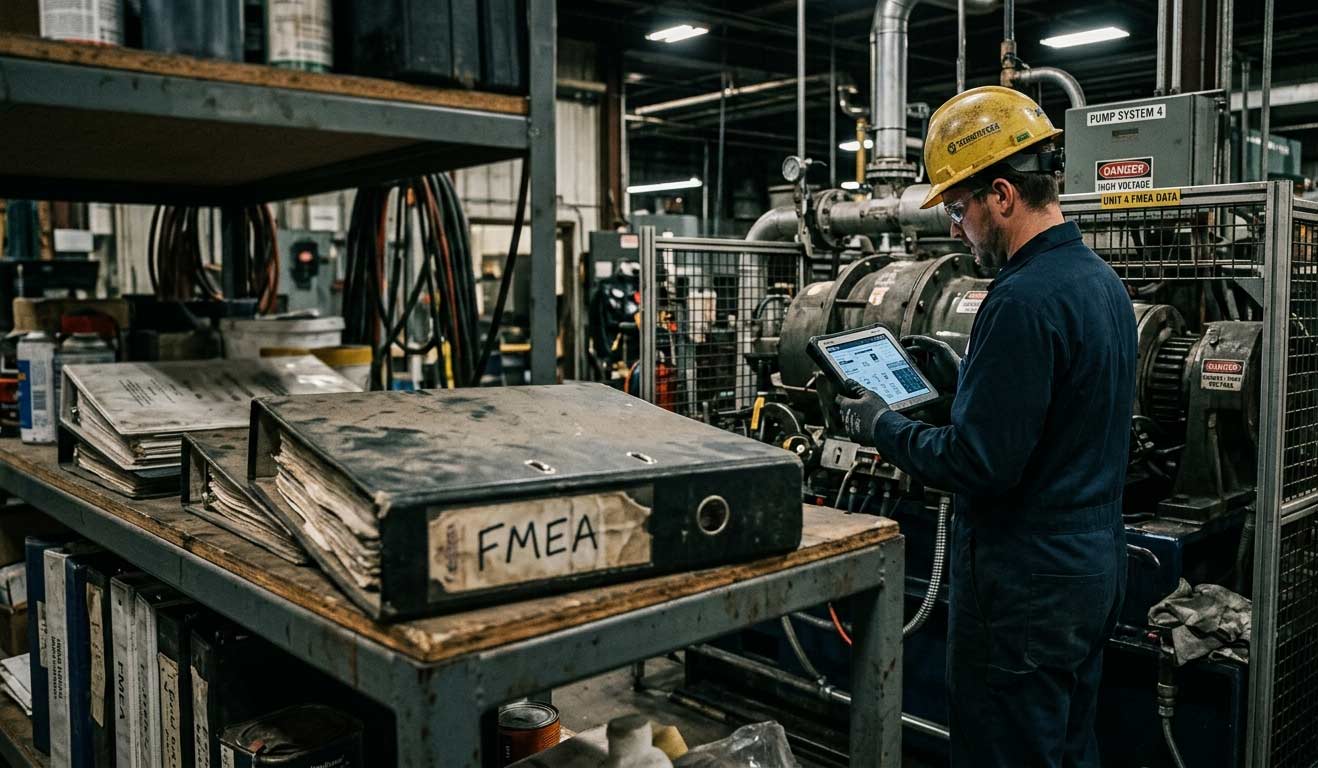
Why Your FMEA Is Sitting in a Binder (And What It Should Be Doing Instead)
Most facilities have an FMEA — but it’s collecting dust in a binder instead of driving decisions on the floor. Here’s how to turn your risk analysis into a living tool that actually protects uptime.

2026-04-24
CMMS Features and Functionality: What to Look for in a Maintenance Management System
Not all CMMS (Computerized Maintenance Management System) platforms are built the same, and in industries like quarrying, aggregates, cement, and ready-mix concrete, there are certain capabilities that carry more weight than others. The CMMS features that matter most for maintenance teams in asset-intensive industries include things such as centralized asset data, work order automation, preventive and predictive scheduling, digital checklists, deviation management, fleet optimization, and mobile-first design with offline capability.

2026-04-24
Cement Plant Inspection Checklist: What to Check, When to Check It, and Why It Fails
Most unplanned shutdowns in a cement plant don’t come out of nowhere. There’s usually a trail beforehand. Maybe a kiln bearing that’s been running 15 degrees above baseline for three weeks, noted by the operator on shift but never formally flagged because it hadn’t tripped an alarm yet. The issue isn’t a lack of warning, its that small deviations are often tolerated until they tip over into something serious.

2026-04-01
How to Choose the Right Work Order App for Your Industry
When something breaks on site, the fix gets most of the attention, but it’s rarely where things go wrong. What’s just as critical is everything around it: who reported it, who picked it up, what got missed between shifts, and how long it sat before anyone acted. In many operations, that whole flow is still held together by paper forms, radio calls, and memory.