CheckProof Releases Construction Materials Industry Report 2026

Machine Downtime Tracking: The key to smarter, more efficient operations

Author
Anju Khanna Saggi
Content & Media Relations
Published: 2025-04-25
Last updated: 2026-05-25
Why Machine Downtime Tracking is Essential for Operational Efficiency
Book a demo
Gain control over equipment performance, minimize downtime and costly disruptions with data-backed maintenance decisions.
For many maintenance managers, the fear of unexpected equipment failure is a constant concern. Unplanned machine downtime isn’t just about the cost of repairs—it disrupts production, reduces output, and leaves staff underutilized. This kind of equipment downtime results in significant cost overruns and inefficiencies. That’s why machine downtime tracking is no longer optional—it’s essential. It allows teams to monitor and log machine activity, flag recurring failures, and shift from reactive to proactive maintenance strategies.
This article will walk you through all you need to know about machine downtime tracking and the software that powers it—how it works, key features and what to consider when choosing a system for your business. We cover:
Key Features of Machine Downtime Tracking Software
A reliable machine downtime tracking system will typically combine automated data capture, telematics, and user-friendly mobile interfaces to give teams instant visibility into unplanned stops as well as provide the tools to act on them.
- Real-time logging of equipment downtime
Traditional methods like spreadsheets provide a basic overview but lack the automation and real-time insights that modern machine downtime tracking systems offer. A solid system can improve OEE (Overall Equipment Effectiveness) by identifying recurring breakdown patterns and capturing sensor-based triggers in real-time to prompt maintenance tasks before issues escalate. - Automating machine downtime monitoring
A machine downtime monitoring system usually connects fleets through sensors, streaming brand telematics data in real time, giving a full overview of your assets. In heavy industries, tracking downtime involves telematics and IoT (Internet of Things), which help create a connected plant. By integrating these technologies, businesses can monitor key metrics like temperature, vibration, operating time, fuel levels, idle time and more - allowing them to proactively address issues before they escalate. - Classifying downtime causes & categories
Understanding why equipment downtime happens is just as important as knowing when it happens. Effective machine downtime tracking software doesn’t just log incidents—it helps classify them by root cause, duration, and impact. This kind of equipment downtime analysis enables businesses to identify patterns, uncover underlying issues, and prioritize corrective actions. A good tracker simplifies this process by automating data collection, sending real-time alerts when failures occur, and generating detailed reports that break down downtime by machine, department, or failure type. It integrates seamlessly with your CMMS and provides mobile access to frontline teams, so they can log issues accurately and immediately—ensuring every downtime event is captured with context and clarity.
Together, these functions form the backbone of a smart machine downtime tracking solution—giving businesses the visibility they need to reduce inefficiencies, extend asset life, and maintain peak operational performance. Effective machine downtime tracking software ensures businesses stay ahead of breakdowns, rather than reacting to them.
Contact us for downtime tracking solutions
How machine downtime tracking works
In the construction materials industry, heavy machinery comes with an equally heavy price tag. Downtime (when a machine is out of service for repairs or part replacements) is inevitable, but how it’s managed makes all the difference.
Planned downtime is a necessary part of preventive maintenance, but unplanned equipment downtime is a costly disruption. It triggers a cascade of expenses—express-ordered parts, staff reallocations, and supply chain delays that impact stock levels and customers. Simply put, failing to plan for downtime means planning for failures.
This is where machine downtime tracking software steps in. When frontline workers can instantly log events—even while offline—and sync later, teams benefit from centralized logging, data visibility across fleets, and real-time alerts. Central features typically include:
1. Automated data collection
Eliminate the need for manual input by using IoT-enabled tracking or direct integration with equipment sensors.
2. Real-time downtime triggers
Receive instant notifications about machine failures to take immediate action.
3. Comprehensive reporting & analytics
Access to detailed reports that analyze downtime trends, help in proactive decision-making and enables accurate equipment downtime analysis and pattern detection.
4. Integration with CMMS software
Seamless connection with your maintenance management solutions to ensure equipment reliability.
5. Mobile access for frontline workers
Allow teams to log and track downtime incidents from any location, ensuring an uninterrupted workflow.
Book a demo
10 benefits of tracking machine downtime
So, you’re aligned on why unplanned machine downtime is undesirable and what you stand to lose, but what about the gains? Here are ten key benefits of keeping on top of equipment downtime:
1. Extends the lifespan of assets and heavy equipment: avoiding critical breakdowns, integrating effective CMMS software to help look after your fleet.
2. Insights on brand reliability: does one machine brand outperform another? Data streamed directly from your assets will give you the whole picture.
3. Optimizes Resources: Reduce idle time, reallocate personnel immediately and maximize efficiency across your fleet.
4. Reduction of emergency repairs: Any maintenance manager who’s had to order missing critical parts of machinery, is aware of the premium billing for rushed-through items. Avoid this with an effective machine downtime monitoring system.
5. Identifies recurring issues: Gain understanding of recurring failure patterns and use the data to prevent costly breakdowns.
6. Strategic purchasing decisions: Avoid urgent, high-cost orders by planning ahead with the help of data gathered from the field.
7. Improved stock and asset management: Ensure you have the right parts in stock at the right time and keep on top of which machines need repairs, replacements, or upgrades.
8. Minimizes unexpected equipment failures and maximizes uptime: Ensure maintenance teams focus on proactive tasks, not firefighting breakdowns.
9. Removes reliance on external contractors: minimize or eliminate costly emergency external labor by planning ahead for your downtime maintenance.
10. Improves overall operational efficiency through data: maintenance managers can prioritize tasks, schedules and workflows based on data-driven insights.
Seamless machine downtime tracking with CheckProof
CheckProof’s platform helps businesses streamline machine downtime tracking by integrating real-time telematics with frontline reporting. It monitors performance, detects inefficiencies, and triggers automated maintenance workflows from one dashboard.
Businesses and site managers can manage telematics data from a variety of machines and vehicles of several different brands, all on the same platform. You can also combine this data with deviations reported by your frontline employees to follow up on ongoing issues and make sure routines are followed.
Key Features
- Pre-built integrations with major OEMs – CheckProof connects with Volvo, Caterpillar, Liebherr, Scania, Terex, enabling seamless data management across mixed fleets.
- Real-time insights – Access data on operating time, fuel consumption, idling, error codes, and total payload to optimize machine equipment and asset lifespan.
- External API offers endless possibilities – CheckProof offers an open API (Application Programming Interface). This allows for different systems to speak to each other and transmit data. So, data from your fleet can be streamed and integrated with tools like Tableau, Power BI or other systems for deeper analytics and decision-making.
- Smart IoT devices for usage-based maintenance (UBM) – With Pigeon devices, businesses can automatically collect operating data directly from machinery to trigger maintenance tasks.
By centralizing machine downtime tracking in one platform, CheckProof ensures maintenance routines are followed correctly and on time, basing repair and purchasing decisions on accurate data. It also eliminates the need to log into multiple systems to find information from a diverse fleet, ensuring a seamless and efficient approach to downtime management.
Unexpected machine downtime is a costly challenge for industries that rely on heavy equipment, yet many still use inefficient maintenance methods. Without a solid system for equipment downtime analysis, businesses risk production losses and higher costs. But with a reliable solution, they gain full visibility into machine health, enabling them to extend asset life and plan more efficiently.
With CheckProof’s advanced machine downtime tracking software, you can proactively reduce equipment downtime, convert your machine downtime to uptime and take back control of your operations.
Book a demo
Frequently Asked Questions on Machine Downtime Tracking
Want to know what CheckProof can do for you?
CheckProof's easy-to-use app makes it easier to do the right thing at the right time. Discover how you can run world-class maintenance that is both cost-effective and sustainable.
Book a demo

2026-09-29
The AggNexus 2026 Report: Highlights from the Digital Innovation Conference
AggNexus 2026 in Austin was the biggest edition yet. After a year of AI first steps, the focus shifted to how to get people to change. Here are CheckProof’s key takeaways on change management, fast-moving AI, compliance and passing on know-how.

2026-09-24
A Stronger Foundation: Rohrdorfer on Digitizing Safety and Efficiency
Rohrdorfer, a leading construction materials producer in five countries, has used CheckProof for years to streamline safety, maintenance and quality work and to sharpen its customer focus.

2026-07-10
10 Must-Have Features for an Incident Management Platform in the Heavy Industry
When an incident happens, every minute matters. A near miss, equipment damage, or a hydraulic leak can quickly become a bigger risk if the issue is not reported, investigated, and followed up properly. When an incident happens, every minute matters. A near miss that goes unreported, or a fault that isn’t followed up, can quickly become a bigger risk if the issue is not reported.

2026-07-09
The Benefits of a Quarry Crusher Management Software
Paper forms, scattered systems, and knowledge locked in one person’s head all delay the same thing: catching crusher problems before they become breakdowns. This piece covers the four biggest challenges in crusher operations and how CheckProof brings inspections, maintenance, and issue tracking into one place.

2026-07-06
Hillhead 2026 – The CheckProof Report
Hillhead 2026 broke every record with 627 exhibitors and three days packed with electric machinery, connected intelligence, and sustainable innovation. CheckProof was on the ground as an exhibitor and sponsor — here’s what our team took away from the show floor.

2026-06-12
Brice Aggregates: What Operational Excellence Looks Like at a Needingworth Quarry
The inaugural CheckProof Industry Excellence Award winners on going digital from the ground up, and the moment their frontline teams bought in.
2026-05-07
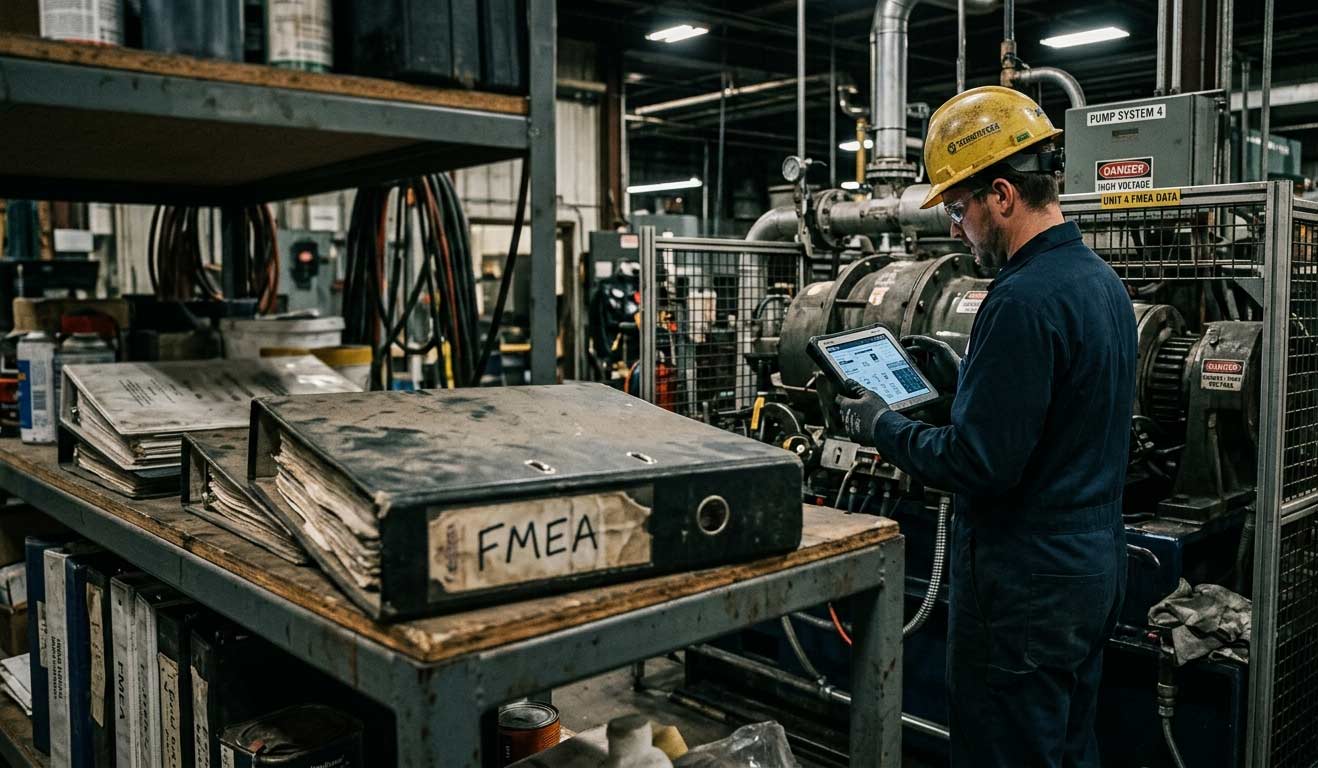
Why Your FMEA Is Sitting in a Binder (And What It Should Be Doing Instead)
Most facilities have an FMEA — but it’s collecting dust in a binder instead of driving decisions on the floor. Here’s how to turn your risk analysis into a living tool that actually protects uptime.

2026-04-24
CMMS Features and Functionality: What to Look for in a Maintenance Management System
Not all CMMS (Computerized Maintenance Management System) platforms are built the same, and in industries like quarrying, aggregates, cement, and ready-mix concrete, there are certain capabilities that carry more weight than others. The CMMS features that matter most for maintenance teams in asset-intensive industries include things such as centralized asset data, work order automation, preventive and predictive scheduling, digital checklists, deviation management, fleet optimization, and mobile-first design with offline capability.

2026-04-24
Cement Plant Inspection Checklist: What to Check, When to Check It, and Why It Fails
Most unplanned shutdowns in a cement plant don’t come out of nowhere. There’s usually a trail beforehand. Maybe a kiln bearing that’s been running 15 degrees above baseline for three weeks, noted by the operator on shift but never formally flagged because it hadn’t tripped an alarm yet. The issue isn’t a lack of warning, its that small deviations are often tolerated until they tip over into something serious.

2026-04-01
How to Choose the Right Work Order App for Your Industry
When something breaks on site, the fix gets most of the attention, but it’s rarely where things go wrong. What’s just as critical is everything around it: who reported it, who picked it up, what got missed between shifts, and how long it sat before anyone acted. In many operations, that whole flow is still held together by paper forms, radio calls, and memory.