CheckProof Releases Construction Materials Industry Report 2026

SOP Compliance: How to Get Your Frontline Teams On Board

Author
Linn Björklund
Published: 2023-11-22
Last updated: 2026-09-28
Setting up SOPs (Standard Operating Procedures) for crucial tasks is an effective way to ensure safe and consistent work methods across your heavy industry sites. That is, if your SOPs are available, relevant, and easy to use for frontline workers – which unfortunately isn’t always the case. This article offers you eight best practices for how to ensure frontline operational compliance, helping you improve SOP compliance by adapting your instructions to suit the people who depend most on them.
Key takeaways
- SOP compliance depends on procedures being clear, current, and easy to access during the task.
- Mobile, step-by-step instructions help frontline teams work safely without relying on memory.
- Photos, videos, and consistent layouts make complex procedures easier to follow.
- Frontline feedback helps reveal unclear steps and keep SOPs practical under pressure.
- Digital records provide proof of completion and highlight skipped steps or recurring deviations.
What are SOPs, and why are they important?
An SOP, or Standard Operating Procedure, is a detailed step-by-step guide on how to perform a certain task in a safe and correct manner. The purpose of the SOP is to ensure a task is carried out the same way every time, regardless of who’s doing it.
How are SOPs used in Heavy Industries?
Heavy industry sites, like aggregate quarries or asphalt production plants, rely on complex equipment. Maintaining and servicing these machines might be more straightforward for a trained mechanic or specialist technician. But they aren’t always available on-site.
Well-put-together SOPs enable less experienced frontline operators to carry out basic maintenance tasks and solve minor issues directly instead of having to call a contractor and wait for them to come to the site. This minimizes unplanned (and costly) halts in production.
Joe Cage, Head of Customer Success at CheckProof, explains:
– A good SOP is like an IKEA manual for heavy industry equipment. It should be detailed and easy to follow. That way, an operator without previous experience with a particular crusher or screener can do routine maintenance and simpler repairs on it in a safe way. For more complex issues, for example, if welding is required, you’ll still need a specialist.
What is SOP Compliance?
SOP compliance means that work is carried out according to the current approved Standard Operating Procedure. The operator follows the required steps, uses the specified tools and safety measures, and records the result correctly. It is not enough for an SOP to exist somewhere in a binder or shared folder. The procedure must shape how the task is actually performed.
In heavy industry, SOP compliance helps keep work consistent across shifts, sites, and experience levels. It reduces the risk of missed safety steps, poor-quality work, equipment damage, and improvised repairs. It also creates evidence and builds work order history showing that the correct process was followed if a problem, incident, or audit occurs later.
Frontline operational compliance doesn't mean following an outdated instruction without question. Operators should have a clear way to report when an SOP no longer matches the equipment or conditions in front of them. That feedback is part of keeping the procedure safe and useful.
Why Frontline SOP Compliance fails
There are many reasons frontline teams deviate from procedures, and it's not always about care or attitude. More often, the SOP does not fit the job as it is performed. It may be too long, difficult to find, written in unfamiliar language, or based on equipment that has since changed. Under production pressure, even a small obstacle makes an unofficial shortcut more likely.
SOPs written for Auditors, not Operators
An SOP can look complete on paper and still be hard to follow next to the machine it's meant for. Long paragraphs, formal language, and vague instructions force operators to interpret the procedure while doing the work. “Remove the cover safely” might satisfy a document template, but it does not explain which cover, where its fasteners are, or where to place it once removed.
Write for the person performing the task. Use direct instructions, one action at a time, supported by photos or short videos where they remove doubt. The document should still satisfy audit requirements, but its first job is to guide the work.
SOPs nobody can find at the Point of Work
A correct procedure has little value if the operator cannot reach it when needed. Paper copies may sit in an office, while digital files become buried in shared folders or hidden behind a desktop login. Workers then have to rely on memory, ask a colleague, or repeat whatever was done last time.
Put SOPs where the work happens. A mobile app, QR code, or RFID tag can connect a machine or location directly to the correct procedure. Offline access also matters at remote plants, quarries, and other areas with weak coverage.
SOPs that are too slow to update
Equipment changes, incidents reveal new risks, and regulations move on. If revising an SOP requires emails, manual formatting, printing, and replacing copies across several sites, outdated instructions will remain in circulation.
A compliance SOP that's easy to update should have a clear owner, review date, approval process, and version history. A centralized digital system allows one approved change to reach every affected worker and site at once. Old versions should be removed from use while remaining available in the audit history.
8 best practices to ensure SOP Compliance across your Frontline Teams
Based on his extensive experience in creating SOPs for frontline teams, Joe shares the following dos and don’ts for successful implementation and long-term compliance:
1. Consider your user
Put yourself in the shoes of a frontline operator who’s new to the site and the equipment. What do they need to know to perform the task safely? For example, don’t just write ‘take the cover off’. You need to elaborate. Add detailed step-by-step instructions such as what the cover looks like, how to find it on the machine, how to take it off, where to put it once it’s off to avoid tripping over it, and so on.
2. Divide your SOPs into manageable portions
Information is harder to take in when it’s served in big bulks, regardless of whether it’s in the form of printed papers or a seemingly endless document that you have to scroll through.
A digital SOP presented in a mobile-friendly interface lets you divide your instructions into manageable portions. The operator needs to confirm the completion of one step before moving on to the next, which helps them focus on one thing at a time.
3. Include visuals in your SOPs
Adding pictures to your instructions will make them much easier to follow than if a task is described using text only. Video recordings of crucial steps will further reduce the risk of mistakes and misunderstandings.
4. Get frontline feedback on your SOPs before implementation
If frontline staff don’t understand or see the point of an SOP, they’re much less likely to follow it in their daily job. Therefore, once you’ve drafted a new SOP, let a staff member go through the different steps under your supervision. This way, you’ll get direct feedback and can adjust the instructions wherever necessary before implementing it at all relevant sites.
5. Leverage digital documentation – including time duration
One of the key benefits of digitizing your SOPs is that you automatically get a detailed record of all completed tasks, including date, time, and confirmation from the operator on-site. In case of an audit, you can always go back to ensure that staff members have accessed the right instructions.
A digital SOP also enables you to log the time frontline operators spend on each step of the prescribed process. This way, you can detect any deviations from the expected duration. For example, if a task that should take two hours has been completed in minutes, you can assume it hasn’t been done properly and you should follow up.
6. Use a consistent format for delivering all your SOPs to Frontline Teams
The best format is a mobile-friendly sequence that guides the operator through one clear step at a time. Instead of displaying a long document that requires constant scrolling, it should break the task into manageable actions and show the information needed at that moment.
A well-designed SOP for frontline employees should cover:
- A clear description of the task and when the SOP applies
- Required PPE, tools, permits, and safety preparations
- Short, numbered instructions in the correct order
- Photos, diagrams, or videos for difficult steps
- Warnings placed beside the relevant action
- Confirmation of critical steps before moving forward
- A clear route for reporting defects or unexpected conditions
- Offline access where network coverage is unreliable
The format should remain consistent across procedures. Once workers recognize the layout, they can find instructions faster and focus on the task rather than learning a new document structure each time.
7. Make sure your SOPs are available on a mobile device
Far too often, SOPs are only available on paper and kept in a binder in the site manager’s office. And if they do exist in a digital format, they tend to be stored on servers or intranet pages requiring desktop computer access. And where there’s a lack of accessible documentation for frontline staff, there’s typically also a lack of routine compliance.
The solution to this challenge is ensuring your SOPs are available on mobile devices – ideally in an app that supports offline mode. This way, your frontline workers never need to look further than their own pocket to find an updated SOP for any task or machine around your plants or quarries.
8. Keep your SOPs up-to-date
SOPs need to be continuously reviewed and adjusted to stay compliant with updated HSEQ standards and policies at your company, as well as changes in government regulations.
Schedule reminders at an appropriate time interval to ensure you revisit your SOPs regularly.
Digital tools let you update your SOPs across all relevant sites simultaneously, which is crucial from a workplace safety perspective. For example, an accident or incident at one site will require SOP updates across all similar sites to prevent the same thing from happening again somewhere else.
How to ensure the Frontline Teams actually follow the SOPs
People are more likely to follow a procedure when it helps them complete the job safely and efficiently. Involve experienced operators when writing and testing the SOP, then watch someone unfamiliar with the task use it. The places where they hesitate, ask questions, or take a different route show where the instructions need work.
High-pressure periods provide the real test. If an SOP is too slow or awkward during a busy shift, workers will find a shortcut. Remove unnecessary steps, but protect the checks that control serious risks. Give the task a realistic amount of time and make it clear that production targets never override critical safety requirements.
Managers should also respond constructively when workers identify a problem with a procedure. If feedback disappears into a void, people stop reporting gaps and start working around them. Treat frontline input as part of SOP control, not as resistance to compliance.
How to track and prove SOP Compliance
A signature at the bottom of a form only proves that somebody signed it. Stronger evidence shows how the task was completed from start to finish. A digital record can capture the operator, date, time, asset, location, steps completed, readings entered, and any issues reported along the way.
For safety-critical or quality-sensitive steps, the SOP can require additional proof such as:
- Before-and-after photos
- Measurements or condition readings
- Comments explaining a deviation
- Supervisor approval
- A timestamp for each completed stage
- Confirmation that corrective work was completed
Photo proof can be mandatory before the operator continues or closes the task. However, it should be used where an image provides meaningful evidence, not added to every step as extra administration.
Tracking also helps improve the SOP itself. Repeatedly skipped steps, unusually short completion times, recurring deviations, or frequent requests for help may show that the procedure is unclear, unrealistic, or out of date.
Your Guide to HSE Compliance
Want to find out how you can leverage digital technology, behavioral change, and maintenance best practices to improve workplace safety in your organization? Download our guide to ensure HSE compliance across your sites.
Choosing Software for your Frontline Standard Operating Procedures
The best software for frontline operating procedures make SOPs easier to use in the field while giving managers control over versions, assignments, and records. A simple document library may store instructions, but it will not necessarily show whether the correct procedure was followed.
With CheckProof you get an SOP compliance platform and app with photo proof requirements, offline capabilities, and many more features to ensure your frontline teams are always in the loop, including:
- Mobile and offline access
- Mandatory fields and completion checks
- Before-and-after photo proof
- Version control, approvals, and review reminders
- QR code or RFID access at the point of work
- Task assignment and acknowledgement
- Time, user, asset, and location records
- Deviation reporting and corrective actions
- Reporting across multiple teams and sites
FAQ - Inspection Checklists
Want to know what CheckProof can do for you?
CheckProof's easy-to-use app makes it easier to do the right thing at the right time. Discover how you can run world-class maintenance that is both cost-effective and sustainable.
Book a demo

2026-09-29
The AggNexus 2026 Report: Highlights from the Digital Innovation Conference
AggNexus 2026 in Austin was the biggest edition yet. After a year of AI first steps, the focus shifted to how to get people to change. Here are CheckProof’s key takeaways on change management, fast-moving AI, compliance and passing on know-how.

2026-09-24
A Stronger Foundation: Rohrdorfer on Digitizing Safety and Efficiency
Rohrdorfer, a leading construction materials producer in five countries, has used CheckProof for years to streamline safety, maintenance and quality work and to sharpen its customer focus.

2026-07-10
10 Must-Have Features for an Incident Management Platform in the Heavy Industry
When an incident happens, every minute matters. A near miss, equipment damage, or a hydraulic leak can quickly become a bigger risk if the issue is not reported, investigated, and followed up properly. When an incident happens, every minute matters. A near miss that goes unreported, or a fault that isn’t followed up, can quickly become a bigger risk if the issue is not reported.

2026-07-09
The Benefits of a Quarry Crusher Management Software
Paper forms, scattered systems, and knowledge locked in one person’s head all delay the same thing: catching crusher problems before they become breakdowns. This piece covers the four biggest challenges in crusher operations and how CheckProof brings inspections, maintenance, and issue tracking into one place.

2026-07-06
Hillhead 2026 – The CheckProof Report
Hillhead 2026 broke every record with 627 exhibitors and three days packed with electric machinery, connected intelligence, and sustainable innovation. CheckProof was on the ground as an exhibitor and sponsor — here’s what our team took away from the show floor.

2026-06-12
Brice Aggregates: What Operational Excellence Looks Like at a Needingworth Quarry
The inaugural CheckProof Industry Excellence Award winners on going digital from the ground up, and the moment their frontline teams bought in.
2026-05-07
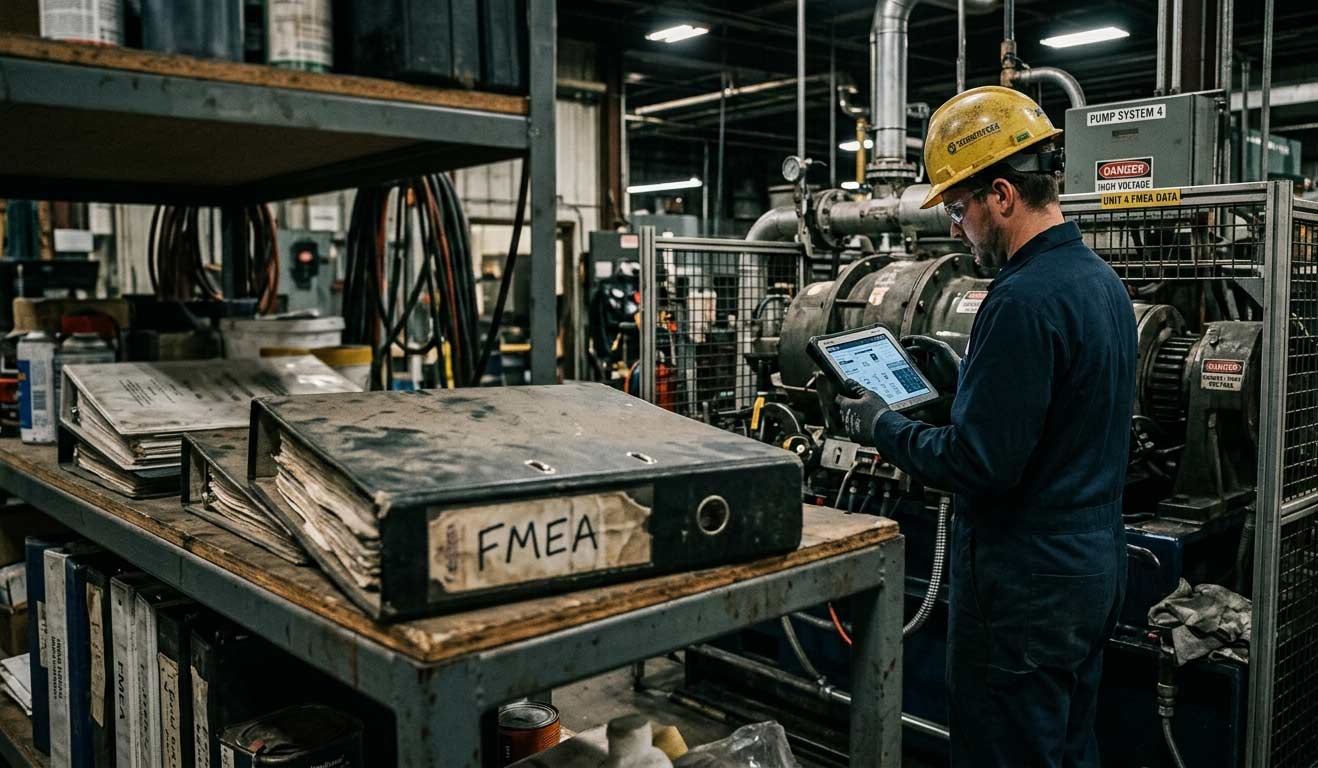
Why Your FMEA Is Sitting in a Binder (And What It Should Be Doing Instead)
Most facilities have an FMEA — but it’s collecting dust in a binder instead of driving decisions on the floor. Here’s how to turn your risk analysis into a living tool that actually protects uptime.

2026-04-24
CMMS Features and Functionality: What to Look for in a Maintenance Management System
Not all CMMS (Computerized Maintenance Management System) platforms are built the same, and in industries like quarrying, aggregates, cement, and ready-mix concrete, there are certain capabilities that carry more weight than others. The CMMS features that matter most for maintenance teams in asset-intensive industries include things such as centralized asset data, work order automation, preventive and predictive scheduling, digital checklists, deviation management, fleet optimization, and mobile-first design with offline capability.

2026-04-24
Cement Plant Inspection Checklist: What to Check, When to Check It, and Why It Fails
Most unplanned shutdowns in a cement plant don’t come out of nowhere. There’s usually a trail beforehand. Maybe a kiln bearing that’s been running 15 degrees above baseline for three weeks, noted by the operator on shift but never formally flagged because it hadn’t tripped an alarm yet. The issue isn’t a lack of warning, its that small deviations are often tolerated until they tip over into something serious.

2026-04-01
How to Choose the Right Work Order App for Your Industry
When something breaks on site, the fix gets most of the attention, but it’s rarely where things go wrong. What’s just as critical is everything around it: who reported it, who picked it up, what got missed between shifts, and how long it sat before anyone acted. In many operations, that whole flow is still held together by paper forms, radio calls, and memory.