CheckProof Releases Construction Materials Industry Report 2026

Trend Report: Key moments in the Construction Materials industry (2014–2024)

Author
Anju Khanna Saggi
Content & Media Relations
Published: 2024-11-11
Last updated: 2025-02-21
To celebrate a decade of innovation since CheckProof’s inception in 2014, this report highlights significant milestones across the construction materials industry over the last ten years. From 2014’s economic optimism boosting infrastructure demand, to more widespread adoption of AI and machine learning in 2024. Each year showcases industry advancements that pushed the boundaries in innovation, digitalization, and sustainability.
It’s been an era of transformation for both the industry and CheckProof. If you operate in the construction materials and heavy industry, this report captures key moments that you need to be aware of.
2014: Consumer confidence strengthens the Construction Materials industry
Recovery from the 2008 financial crisis continues. Consumer confidence strengthens with the US Consumer Confidence Index (CCI) reaching 78.1 in December. This is close to levels seen before the US government shutdown and the highest since 2008, reflecting optimism in the economy and job outlook. The National Association of House Builders (NAHB) Housing Market Index (HMI) in the US reached 58 in December, indicating strong builder confidence thanks to rising home sales and fewer vacancies, matching the highest levels seen since 2005. The optimism drives demand in infrastructure and construction as economies globally regain momentum.
In Stockholm, Sweden, childhood friends, Håkan and Jonas, founded CheckProof, a digital platform coupled with a frontline-friendly app, revolutionizing maintenance, and HSEQ management.
2015: Paris Agreement signed
The Paris Agreement heralded an era of global commitment within the construction materials and heavy industries to reduce emissions and adopt sustainability measures. Regarding digital adoption, in 2015, companies were found to be at varied stages of digital transformation. Heavy-side producers, like those in aggregates, concrete, and construction, were at the earliest stage.
However, some tools did take off, for example, Building Information Modelling (BIM) became a powerful tool in driving efficiency and increased productivity in the construction industry. Material innovations such as nanocomposites began transforming the cement industry.
However, even the most digitally advanced construction materials companies still lagged behind sectors like media, retail, and travel in their digital maturity.
Sensing the time was right for a mobile maintenance management system, CheckProof officially launched its app.
2016: Skilled labor shortages continued to impact companies.
Skilled labor shortages continued to impact companies, driven by workers leaving during the recession and never returning, resulting in staffing challenges. Offsite construction methods, like prefabrication, gained traction as a cost- and time-saving solution. Due to labor constraints, companies also became more selective in taking on projects. Green building saw continued growth in both commercial and residential sectors.
Additionally, with a focus on heightened regulatory scrutiny and fines from safety organizations like OSHA in the US for job-site-related accidents, companies begin to reevaluate their safety procedures. Health, Safety & Environment inspections, as well as Quality Control routines, start taking priority.
CheckProof’s app gains traction as it addresses consistency in maintenance and health and safety routines. The company expands its client base outside of Sweden, signing clients in the UK, Estonia, and Norway.
2017: Internet of Things (IoT) becomes a buzzword
The construction materials industry strives for more widespread use of IoT-powered solutions. Advances in IoT and 24/7 connectivity drive the adoption of Building Information Modeling (BIM) across the construction value chain, enabling firms to streamline operations, reduce costs, and engage more directly with end customers. In the concrete, minerals, clays, and stone segment, earnings rose above the cost of capital, signaling profitable growth.
The need to build adaptable and resilient supply chains becomes pertinent after the devastating hurricanes Harvey, Irma, and Maria in the US.
Global demand for concrete reached new highs with urban growth, especially in China and India.
CheckProof gains its first client in China with Fuller Technologies.
2018: Sustainability & technology in focus
Sustainability and technology remained central to innovation in the building materials industry, alongside continued growth and optimism fueled by economic expansion. Demand surged for green building materials that reduce carbon footprints, resist moisture, and promote durability—preferences driven by consumer interest in environmental impact, material safety, and energy efficiency. Innovations included hydro ceramic bricks, light generating concrete that absorbs sunlight and radiates it after dark, self-healing concrete, and smart home systems, marking a shift toward advanced, eco-friendly construction options. New construction technologies like 3D printing and drones also rose in prominence, with drones increasingly supporting aerial inspection and automating specific construction tasks.
At CheckProof, monthly controls reach an all-time high with 17,000 completed checks per month.
2019: Consolidation of industry manufacturers continues
Increased demand for high-strength, high-durability concrete as megacities expanded globally. The aggregate industry showed solid growth, with crushed stone, sand, and gravel production remaining strong. Growth of carbon capture and storage (CCS) technologies in cement plants to address emissions targets. Rising emphasis on climate resilience in infrastructure projects, especially in flood-prone and earthquake-prone regions, spurring demand for stronger, more resilient building materials. The possibility of an infrastructure bill was floated in US Congress was floated, but never came to pass.
Consolidation of industry manufacturers continued. Overall, this year was marked by stable demand and healthy output levels, reflecting a more normalized economic pace.
CheckProof exhibits at Bauma, marking its commitment to serving the construction materials industry on a global stage.
2020: The pandemic leaves a heavy footprint
The COVID-19 pandemic led to reduced demand due to construction halts but sparked interest in contactless construction technology and digital monitoring. Increased reliance on digital platforms for remote site monitoring, project management, and safety compliance in construction. Supply chain disruptions forced industries to re-evaluate local production and material sourcing strategies, impacting cement and aggregate suppliers. Nevertheless, several aggregate producers expressed cautious optimism, ending the year relieved by steady operations despite the challenges of COVID-19 seeing growth opportunities through adaptability and internal improvements.
CheckProof sees increased adoption as digital maintenance tools become increasingly important with less reliance on key staff.
2021: US infrastructure bill passed
The US infrastructure bill was passed authorizing $1.2 trillion for transportation and infrastructure spending. Coupled with post-pandemic stimulus packages worldwide, it contributed to recovery in the construction industry.
However, the industry still struggled with ongoing challenges in the supply chain and shortages in filling key staff vacancies. Equipment lead times were extraordinarily lengthy.
Heightened urgency around climate change led to stricter emissions regulations and penalties in the EU, impacting cement and asphalt production methods.
Prices of construction materials increased by almost 20% in 2021.
CheckProof reaches thousands of active users, signaling rapid adoption.
2022: Higher energy prices lead to further development of electric machinery
The building materials industry faced significant cost pressures in 2022. Inflation drove up input, and higher energy costs, particularly in Europe (due to the Russia-Ukraine conflict) were also compounded by carbon taxes. While demand for home repairs and infrastructure remained strong, higher input costs threatened profit margins. Pricing strategies became crucial to offset the expenses, especially for energy-intensive sectors like cement.
A desire to shift towards more electric solutions led to major developments of electric and hybrid machinery for quarrying and asphalt mixing, reducing carbon emissions on construction sites. Companies pledged to achieve net-zero emissions, pushing the industry toward renewable energy in production processes.
CheckProof rolls out sustainability-focused features, such as fleet optimization, to end excessive idling.
2023: Global focus on resilient infrastructure
The aggregate industry in 2023 maintained strong demand, with notable trends in digitalization, electrification, and sustainability. While workforce challenges persisted, leaders addressed ways to attract a broader talent pool. Continued adaptability and technological adoption remain central as producers aim to meet evolving industry demands and navigate potential future challenges. Global focus on resilient infrastructure after extreme weather events underlined the need for high-strength, climate-resistant building materials.
Increased adoption of predictive maintenance IoT technology for machinery was used in aggregate, cement, ready-mix concrete, and asphalt production, enhancing equipment life and operational efficiency.
CheckProof was named a finalist in Sweden’s TechArenan Challenge.
2024: AI & machine learning are increasingly implemented
The construction materials industry is harnessing AI and machine learning for quality control, particularly in ready-mix concrete, where on-site adjustments optimize mix quality and reduce waste. Predictive maintenance through advanced sensors is used increasingly to prolong the life of key equipment and secure routines for health and safety and environment control inspections.
As circular materials gain traction, legislative mandates support sustainable building and recycling efforts across major markets. Additionally, emissions-reduction incentives are pushing heavy industries toward renewable and low-carbon production methods, enhancing resilience amid ongoing climate challenges.
CheckProof secures investment from Viking Venture, a leading Nordic Venture Capitalist firm, thus paving the way for further geographic expansion into new markets.
This trend report underscores the shift toward digitalization, sustainability, and innovation within the construction materials industry, with ongoing world events and regulatory shifts driving this evolution. These insights offer a perspective on the significant strides the industry has made, displaying resilience whilst navigating difficult world events.
We look forward to moving into 2025 with an even stronger digitization, efficiency, and sustainability focus.
Sources:
Duff & Phelps: Building Products and Materials Industry Insights
BCG: Bringing Digital Disruption to Building Materials
Author
Want to know what CheckProof can do for you?
CheckProof's easy-to-use app makes it easier to do the right thing at the right time. Discover how you can run world-class maintenance that is both cost-effective and sustainable.
Book a demo

2026-09-29
The AggNexus 2026 Report: Highlights from the Digital Innovation Conference
AggNexus 2026 in Austin was the biggest edition yet. After a year of AI first steps, the focus shifted to how to get people to change. Here are CheckProof’s key takeaways on change management, fast-moving AI, compliance and passing on know-how.

2026-09-24
A Stronger Foundation: Rohrdorfer on Digitizing Safety and Efficiency
Rohrdorfer, a leading construction materials producer in five countries, has used CheckProof for years to streamline safety, maintenance and quality work and to sharpen its customer focus.

2026-07-10
10 Must-Have Features for an Incident Management Platform in the Heavy Industry
When an incident happens, every minute matters. A near miss, equipment damage, or a hydraulic leak can quickly become a bigger risk if the issue is not reported, investigated, and followed up properly. When an incident happens, every minute matters. A near miss that goes unreported, or a fault that isn’t followed up, can quickly become a bigger risk if the issue is not reported.

2026-07-09
The Benefits of a Quarry Crusher Management Software
Paper forms, scattered systems, and knowledge locked in one person’s head all delay the same thing: catching crusher problems before they become breakdowns. This piece covers the four biggest challenges in crusher operations and how CheckProof brings inspections, maintenance, and issue tracking into one place.

2026-07-06
Hillhead 2026 – The CheckProof Report
Hillhead 2026 broke every record with 627 exhibitors and three days packed with electric machinery, connected intelligence, and sustainable innovation. CheckProof was on the ground as an exhibitor and sponsor — here’s what our team took away from the show floor.

2026-06-12
Brice Aggregates: What Operational Excellence Looks Like at a Needingworth Quarry
The inaugural CheckProof Industry Excellence Award winners on going digital from the ground up, and the moment their frontline teams bought in.
2026-05-07
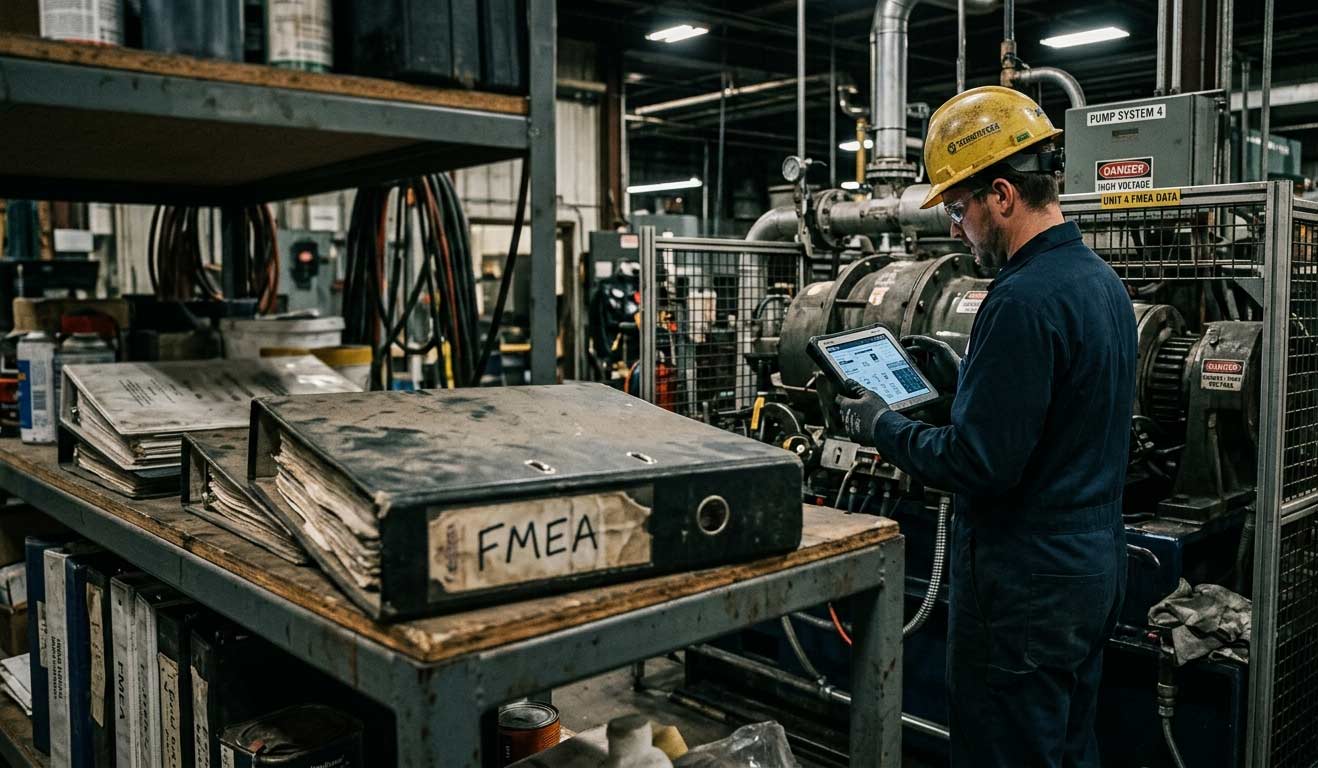
Why Your FMEA Is Sitting in a Binder (And What It Should Be Doing Instead)
Most facilities have an FMEA — but it’s collecting dust in a binder instead of driving decisions on the floor. Here’s how to turn your risk analysis into a living tool that actually protects uptime.

2026-04-24
CMMS Features and Functionality: What to Look for in a Maintenance Management System
Not all CMMS (Computerized Maintenance Management System) platforms are built the same, and in industries like quarrying, aggregates, cement, and ready-mix concrete, there are certain capabilities that carry more weight than others. The CMMS features that matter most for maintenance teams in asset-intensive industries include things such as centralized asset data, work order automation, preventive and predictive scheduling, digital checklists, deviation management, fleet optimization, and mobile-first design with offline capability.

2026-04-24
Cement Plant Inspection Checklist: What to Check, When to Check It, and Why It Fails
Most unplanned shutdowns in a cement plant don’t come out of nowhere. There’s usually a trail beforehand. Maybe a kiln bearing that’s been running 15 degrees above baseline for three weeks, noted by the operator on shift but never formally flagged because it hadn’t tripped an alarm yet. The issue isn’t a lack of warning, its that small deviations are often tolerated until they tip over into something serious.

2026-04-01
How to Choose the Right Work Order App for Your Industry
When something breaks on site, the fix gets most of the attention, but it’s rarely where things go wrong. What’s just as critical is everything around it: who reported it, who picked it up, what got missed between shifts, and how long it sat before anyone acted. In many operations, that whole flow is still held together by paper forms, radio calls, and memory.