CheckProof Releases Construction Materials Industry Report 2026


How Gina Becker at Cemex Germany, and her colleagues increased daily production by 75%, reduced fuel costs, and streamlined operations with CheckProof’s platform.
Q: Can you tell us about your role at Cemex?
Gina Becker: I’m the Coordinator of Project Materials Operations Services, focusing on three main areas: digitization, process optimization, and investments in the ready-mix and aggregates business. My role is versatile—I work with colleagues to implement initiatives like CheckProof, often traveling to different plants and sites to oversee approvals and rollouts.
Q: How did you approach rolling out CheckProof?

Gina Becker: We first agreed on which sites and areas to focus on, starting with Prostein quarries in north-eastern Germany. The group has six hard stone quarries, and these quarries were ideal for gathering feedback as they operate close-knit teams. We started with pilot projects, rolling out site by site. I visit every site and provide ongoing support, ensuring seamless implementation.
Q: What kind of checklists do your teams use with CheckProof?
Gina Becker: We use it for production diaries, mobile equipment checks, and regular maintenance tasks—daily, monthly, quarterly, and yearly. Pre-start checks are also critical. One of the most significant uses is tracking refills, which helps us build KPI reports on fuel usage. This data allows us to understand fuel consumption trends and ask the right questions when discrepancies arise.
Q: What impact has CheckProof had on your operations?
Gina Becker: The platform has transformed how we manage maintenance. Previously, everything was on paper, and repair teams struggled with visibility. Now, deviations are recorded digitally, and tickets can be closed immediately. Plant managers are thrilled with the increased efficiency—more issues are being resolved, and they’re resolved faster. It’s been a game-changer for productivity.
“We increased daily output from 2,000 tonnes to 3,500 tonnes—a significant improvement we initially thought was impossible.”
Q: What key performance indicators (KPIs) or metrics have improved since adopting CheckProof?
Gina Becker: After implementing CheckProof, we introduced a performance meeting to review production diaries, which track metrics like volume, stoppage hours, and equipment availability. For instance, in July, we began optimizing production settings on our crushers. Using CheckProof data, we identified the previous average production levels and adjusted settings like cycle time. As a result, we increased daily output from 2,000 tonnes to 3,500 tonnes—a significant improvement we initially thought was impossible. Importantly, this increase was achieved sustainably, without overburdening equipment.
Q: How have your teams responded to using CheckProof?
Gina Becker: Initially, there was skepticism. People were hesitant to let go of their existing systems. But as they started seeing the benefits—such as faster data input and better visibility—their attitudes shifted. Today, I’d say 99% of our team is happy with it. It’s rewarding to see such a positive response.
Q: Are there specific features of CheckProof that stand out?
Gina Becker: The deviation management feature is invaluable for maintenance. The platform’s gamification elements make it engaging for workers to use, like taking photos and tracking tasks. On the administrative side, the Planning Tool and telematics provide a comprehensive overview, helping us manage fuel usage and scheduling more effectively.
Q: What challenges has CheckProof helped you address?
Gina Becker: Maintenance visibility was a significant challenge. Before CheckProof, there was no reliable way to monitor fuel usage or track tasks. Now, we have accurate data, enabling better decision-making and cost-saving measures. It’s also improved collaboration across teams, which is crucial for audits and compliance.
Q: How do you see CheckProof aligning with Cemex’s future goals?
Gina Becker: CheckProof aligns perfectly with our sustainability goals, particularly in reducing CO2 emissions and improving operational efficiency. As we continue to evolve, I see opportunities to expand its use in health and safety assessments and further integrate it with other systems. Moving forward, we’re focusing on integrating health and safety features. Once our maintenance processes are fully optimized, this will be the next big step.
Want to know what CheckProof can do for you?
CheckProof's easy-to-use app makes it easier to do the right thing at the right time. Discover how you can run world-class maintenance that is both cost-effective and sustainable.
Book a demo

2026-07-10
10 Must-Have Features for an Incident Management Platform in the Heavy Industry
When an incident happens, every minute matters. A near miss, equipment damage, or a hydraulic leak can quickly become a bigger risk if the issue is not reported, investigated, and followed up properly. When an incident happens, every minute matters. A near miss that goes unreported, or a fault that isn’t followed up, can quickly become a bigger risk if the issue is not reported.

2026-07-09
The Benefits of a Quarry Crusher Management Software
Paper forms, scattered systems, and knowledge locked in one person’s head all delay the same thing: catching crusher problems before they become breakdowns. This piece covers the four biggest challenges in crusher operations and how CheckProof brings inspections, maintenance, and issue tracking into one place.

2026-07-06
Hillhead 2026 – The CheckProof Report
Hillhead 2026 broke every record with 627 exhibitors and three days packed with electric machinery, connected intelligence, and sustainable innovation. CheckProof was on the ground as an exhibitor and sponsor — here’s what our team took away from the show floor.

2026-06-12
Brice Aggregates: What Operational Excellence Looks Like at a Needingworth Quarry
The inaugural CheckProof Industry Excellence Award winners on going digital from the ground up, and the moment their frontline teams bought in.
2026-05-07
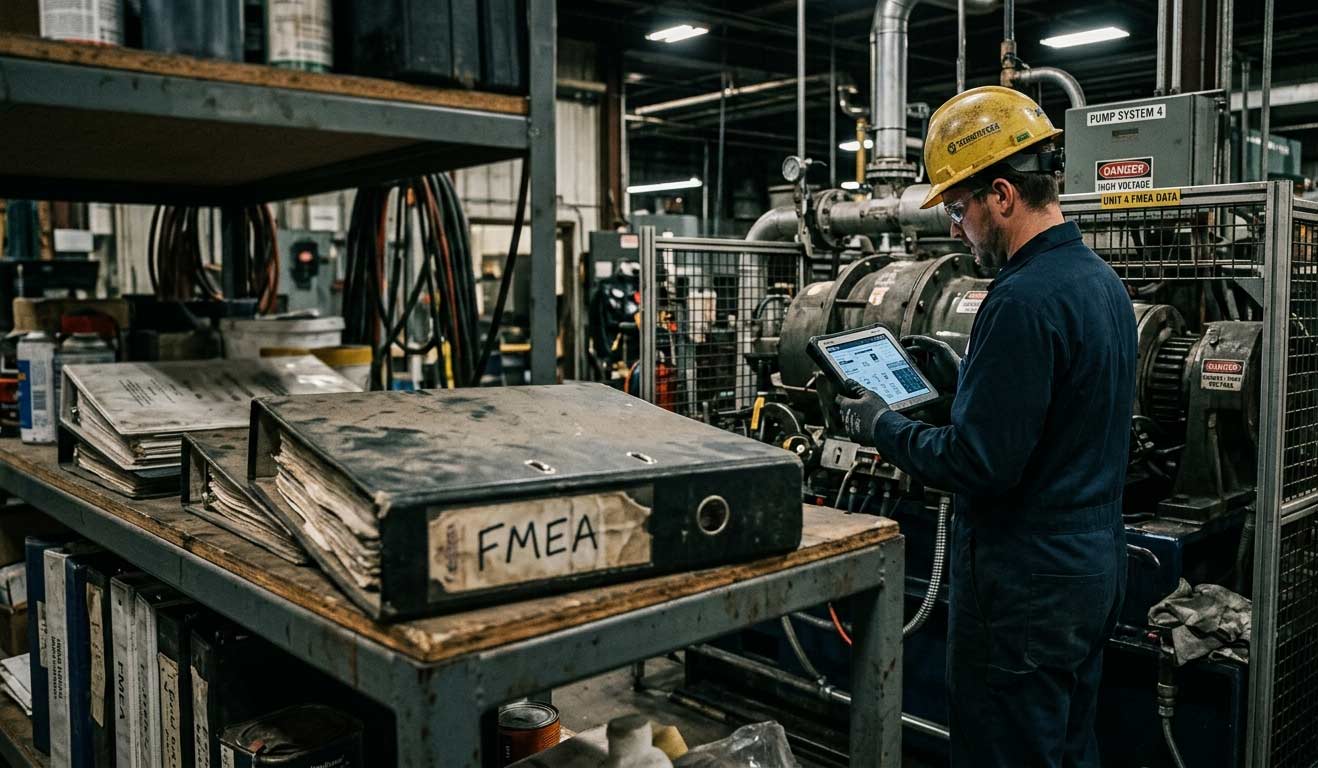
Why Your FMEA Is Sitting in a Binder (And What It Should Be Doing Instead)
Most facilities have an FMEA — but it’s collecting dust in a binder instead of driving decisions on the floor. Here’s how to turn your risk analysis into a living tool that actually protects uptime.

2026-04-24
CMMS Features and Functionality: What to Look for in a Maintenance Management System
Not all CMMS (Computerized Maintenance Management System) platforms are built the same, and in industries like quarrying, aggregates, cement, and ready-mix concrete, there are certain capabilities that carry more weight than others. The CMMS features that matter most for maintenance teams in asset-intensive industries include things such as centralized asset data, work order automation, preventive and predictive scheduling, digital checklists, deviation management, fleet optimization, and mobile-first design with offline capability.

2026-04-24
Cement Plant Inspection Checklist: What to Check, When to Check It, and Why It Fails
Most unplanned shutdowns in a cement plant don’t come out of nowhere. There’s usually a trail beforehand. Maybe a kiln bearing that’s been running 15 degrees above baseline for three weeks, noted by the operator on shift but never formally flagged because it hadn’t tripped an alarm yet. The issue isn’t a lack of warning, its that small deviations are often tolerated until they tip over into something serious.

2026-04-01
How to Choose the Right Work Order App for Your Industry
When something breaks on site, the fix gets most of the attention, but it’s rarely where things go wrong. What’s just as critical is everything around it: who reported it, who picked it up, what got missed between shifts, and how long it sat before anyone acted. In many operations, that whole flow is still held together by paper forms, radio calls, and memory.

2026-04-01
Best Practices for Work Order Management
Efficient maintenance starts with clear work orders. When issues are logged quickly with the right details, photos, and priority, teams spend less time chasing information and more time fixing problems. The result is reduced downtime, smoother shift handovers, and audit-ready operations — even in low-signal or harsh environments where mobile work orders let crews flag issues before they escalate.

2026-03-26
How DAY Group went paperless and transformed maintenance operations with CheckProof
DAY Group Ltd is an independent, family-owned business supplying construction materials and services across the south of England since 1947. Handling over five million tonnes of material annually across divisions including Day Aggregates, Day Glass Recycling, Day Contracting, and Day Equestrian — plus recycling operations processing over 1.5 million tonnes a year — the group operates with close to 200 staff and a large fleet of plant equipment, making uptime, compliance and safety mission-critical.