CheckProof Releases Construction Materials Industry Report 2026

10 Tips to Reduce On-Site Costs in the Construction Materials & Heavy Industry

Author
Anju Khanna Saggi
Content & Media Relations
Published: 2024-08-22
Last updated: 2025-02-21
Managing costs effectively is crucial in the construction materials industry, where tight profit margins are the norm. Whether you’re overseeing asphalt production, concrete plants, quarries, or other construction material operations, reducing on-site costs can make a significant difference.
In this article, we’ll cover 10 actionable tips to help you achieve your cost-reduction targets.
These include:
The importance of cost reduction in our industry
In the construction materials industry, profit margins are often tight, making cost reductions essential to achieving business goals. While higher-end materials may offer some value, it’s typically the quantities produced that drive profitability. Extracting the most value from your resources is therefore critical. Implementing one or more of the suggestions below is a good start.
Tip 1: Review current operating costs
Start by splitting your operating costs into fixed and variable categories. Once you have a clear picture, focus on eliminating or reducing unnecessary expenses. This might involve shopping around for cheaper parts, negotiating better supplier terms, or eliminating non-essential spending. Implementing cost-saving systems may require an initial investment, but the long-term savings often justify it. Fixed costs include items such as plant rent, insurance, and labor, while variable costs can cover royalties on materials, parts, consumables, and utilities.
Tip 2: Decide the best actions going forward
Managing variable costs prudently and overseeing long-term contracts for fixed costs can significantly impact your bottom line. Procurement teams can help by regularly shopping around and negotiating better deals. Even small savings per unit can add up and become substantial amounts over time, especially when dealing with large quantities. Fuel is a good example where the cost may vary (in pennies or cents), but the vast volumes purchased make a significant difference. Implement a weekly or monthly review of these variable costs
Tip 3: Reduce operating costs with digitization
Digitizing frontline operations can greatly reduce costs. For example, gamification and best practices in fleet operations, training through apps, and standard operating procedures (SOPs) can improve user efficiency. Even without advanced telematics, collecting data on user and machine performance allows you to spot trends and optimize operations. Monitoring metrics such as idle time and fuel usage can lead to significant savings.
Tip 4: Streamline maintenance workflows
Streamlining maintenance processes with the help of digital tools can reduce downtime and extend the lifespan of your equipment. For example, a centralized system gives affected parties immediate visibility who can redirect or approve critical maintenance actions immediately. Digitized checklists also standardize workflows contributing to correct actions taken. Building a smooth operation with maintenance schedules, tracking repairs, and ensuring that equipment is operating at peak efficiency will contribute to keeping costs down.
Tip 5: Implement preventive and condition-based maintenance measures
Preventive maintenance is key to avoiding costly breakdowns and unplanned downtime. For example, in industries like asphalt production, adhering to national grid allowance times (and performing preventive maintenance to complete critical tasks within these times) can help avoid penalty charges and save significant sums. Similarly, condition-based or predictive maintenance involves monitoring equipment in real time and performing maintenance based on actual conditions rather than predetermined schedules. With the use of sensors and leveraging real-time data from the field, it can help predict equipment failures before they occur. This approach can prevent unnecessary repairs and reduce the risk of unexpected failures. Building robust OEM solutions will contribute to increasing profitability.
Tip 6: Integrate your systems
If you are running operations on a larger scale, with multiple sites, then your systems need to be speaking to each other, data should run seamlessly between operating systems. Integrating CheckProof with your current ERP system will help you spot trends and make decisions based on up-to-date and real-time data.
Tip 7: Schedule follow-ups
Regular follow-ups (monthly or weekly) are crucial for ensuring that cost-saving measures remain effective over time. By scheduling consistent check-ins with suppliers, contractors, and internal teams, you can address any emerging issues before they escalate into costly problems. These follow-ups also allow you to assess the ongoing efficiency of your operations, ensuring that negotiated terms, delivery schedules, and project timelines are being met as planned. Also, they provide an opportunity to re-evaluate supplier relationships and adjust strategies to adapt to market changes, helping maintain cost efficiency across the board.
Tip 8: Effective downtime reporting
Accurate downtime reporting where defects are reported can help track how long operations were down for and how many hours it took to fix the problem. CheckProof’s inspection and certification unit, can log necessary tasks and track downtime, ensuring that repairs are completed promptly and efficiently. It also allows you to spot troubling trends and can help reduce the overall impact on your operations.
Tip 9: Improving inspection practices
Regular inspections and accurate logging are crucial for maintaining equipment and minimizing costs. By scheduling routine inspections and using checklists, RFID (which ensures the control points have been scanned), and photo documentation, you can ensure that issues are identified and addressed before they escalate into major problems.
Tip 10: Embrace Continuous Improvement Practices
Continuous improvement should be a cornerstone of your cost reduction strategy. Techniques like the “5 Whys” when reporting defects and deviations can help you get to the root cause of issues, enabling you to implement long-lasting solutions. By consistently seeking ways to improve, you can drive operational efficiency and reduce costs over time.
Whether you’re focused on reducing costs through digitization, preventive maintenance, or continuous improvement, our tools can help you achieve your goals. From customizable checklists to real-time data access, CheckProof can help optimize your operations and enhance profitability.
Author
Want to know what CheckProof can do for you?
CheckProof's easy-to-use app makes it easier to do the right thing at the right time. Discover how you can run world-class maintenance that is both cost-effective and sustainable.
Book a demo

2026-09-29
The AggNexus 2026 Report: Highlights from the Digital Innovation Conference
AggNexus 2026 in Austin was the biggest edition yet. After a year of AI first steps, the focus shifted to how to get people to change. Here are CheckProof’s key takeaways on change management, fast-moving AI, compliance and passing on know-how.

2026-09-24
A Stronger Foundation: Rohrdorfer on Digitizing Safety and Efficiency
Rohrdorfer, a leading construction materials producer in five countries, has used CheckProof for years to streamline safety, maintenance and quality work and to sharpen its customer focus.

2026-07-10
10 Must-Have Features for an Incident Management Platform in the Heavy Industry
When an incident happens, every minute matters. A near miss, equipment damage, or a hydraulic leak can quickly become a bigger risk if the issue is not reported, investigated, and followed up properly. When an incident happens, every minute matters. A near miss that goes unreported, or a fault that isn’t followed up, can quickly become a bigger risk if the issue is not reported.

2026-07-09
The Benefits of a Quarry Crusher Management Software
Paper forms, scattered systems, and knowledge locked in one person’s head all delay the same thing: catching crusher problems before they become breakdowns. This piece covers the four biggest challenges in crusher operations and how CheckProof brings inspections, maintenance, and issue tracking into one place.

2026-07-06
Hillhead 2026 – The CheckProof Report
Hillhead 2026 broke every record with 627 exhibitors and three days packed with electric machinery, connected intelligence, and sustainable innovation. CheckProof was on the ground as an exhibitor and sponsor — here’s what our team took away from the show floor.

2026-06-12
Brice Aggregates: What Operational Excellence Looks Like at a Needingworth Quarry
The inaugural CheckProof Industry Excellence Award winners on going digital from the ground up, and the moment their frontline teams bought in.
2026-05-07
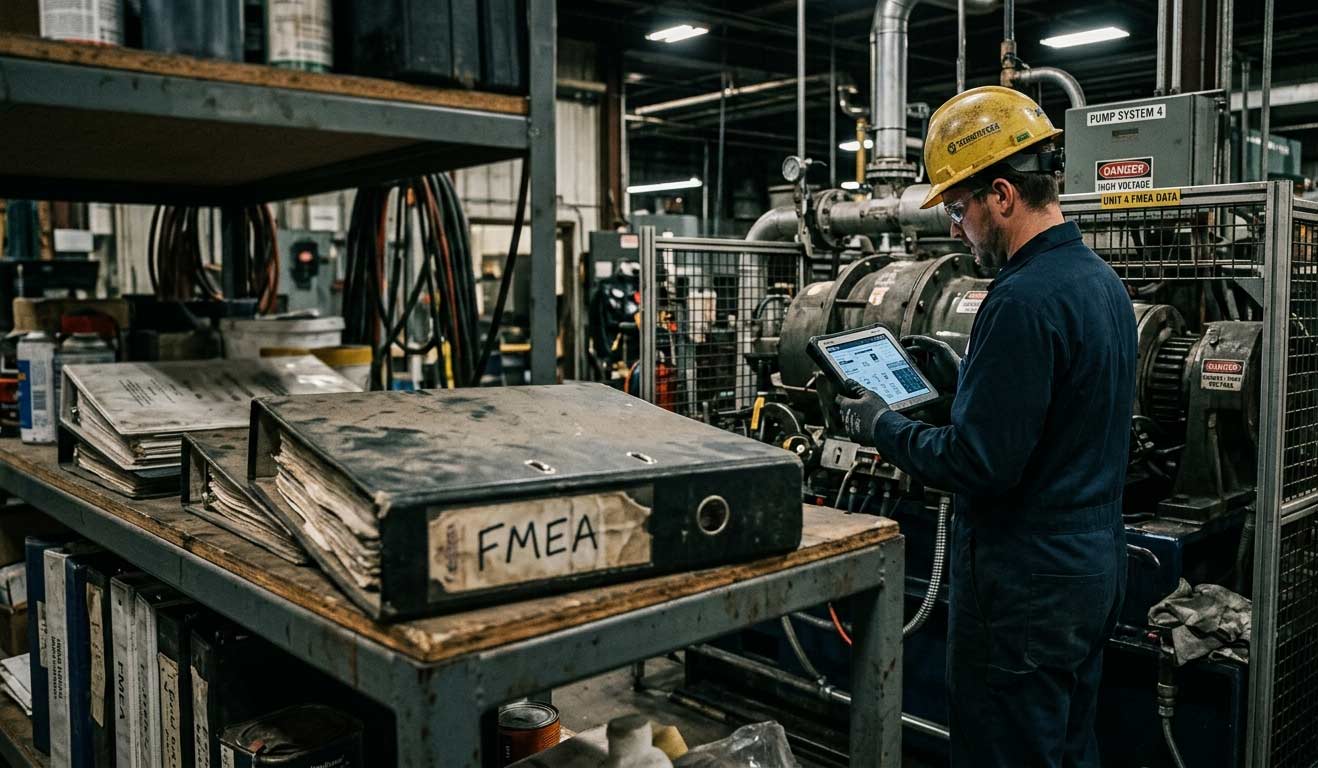
Why Your FMEA Is Sitting in a Binder (And What It Should Be Doing Instead)
Most facilities have an FMEA — but it’s collecting dust in a binder instead of driving decisions on the floor. Here’s how to turn your risk analysis into a living tool that actually protects uptime.

2026-04-24
CMMS Features and Functionality: What to Look for in a Maintenance Management System
Not all CMMS (Computerized Maintenance Management System) platforms are built the same, and in industries like quarrying, aggregates, cement, and ready-mix concrete, there are certain capabilities that carry more weight than others. The CMMS features that matter most for maintenance teams in asset-intensive industries include things such as centralized asset data, work order automation, preventive and predictive scheduling, digital checklists, deviation management, fleet optimization, and mobile-first design with offline capability.

2026-04-24
Cement Plant Inspection Checklist: What to Check, When to Check It, and Why It Fails
Most unplanned shutdowns in a cement plant don’t come out of nowhere. There’s usually a trail beforehand. Maybe a kiln bearing that’s been running 15 degrees above baseline for three weeks, noted by the operator on shift but never formally flagged because it hadn’t tripped an alarm yet. The issue isn’t a lack of warning, its that small deviations are often tolerated until they tip over into something serious.

2026-04-01
How to Choose the Right Work Order App for Your Industry
When something breaks on site, the fix gets most of the attention, but it’s rarely where things go wrong. What’s just as critical is everything around it: who reported it, who picked it up, what got missed between shifts, and how long it sat before anyone acted. In many operations, that whole flow is still held together by paper forms, radio calls, and memory.